
Matterhorn Ascent: A Reality Check
An honest, responsible guide to climbing the Matterhorn — the fitness, experience, guide requirement, season and cost it really takes — and the closer-to-earth ways most visitors meet the Horu instead.

Photo: Andrews Art / Unsplash
- ✓The Matterhorn (4,478 m) is a serious mountaineering objective, not a hike — for almost everyone the right answer is to admire it, not to climb it.
- ✓The normal route is the Hörnli ridge from the Hörnlihütte (3,260 m); it demands real rock-climbing fitness, head for heights and prior alpine experience.
- ✓Climb only with a qualified mountain guide — this is the standard and the safe choice, and guides take strict fitness and experience criteria before they accept you.
- ✓Roughly 500 people have died on the mountain since the first ascent in 1865. Treat the decision to attempt it with the gravity it deserves.
Read this before you dream of the summit
Every year Zermatt fills with people who fall in love with the Matterhorn and quietly wonder whether they could climb it. It is a beautiful thought, and for most of them the honest answer is no — and that is not a failure. The Horu is one of the most demanding of the classic 4,000-metre peaks in the Alps. The normal route up the Hörnli ridge is a long, exposed scramble and rock climb at altitude, on loose and serious ground, with a relentless schedule that starts in the dark and turns around early whether or not you have reached the top.
This page exists to be honest with you rather than to sell you a summit. If you are a fit, experienced alpinist, it points you to the right people. If you are not — and the great majority of Zermatt's visitors are not — it points you, with no embarrassment at all, to the dozen quieter, safer, often more beautiful ways the village gives you to stand close to the mountain. Loving the Matterhorn and climbing the Matterhorn are different things, and only one of them is for nearly everyone.
At a glance — the ascent in plain terms
The facts below are evergreen guidance, not a booking. For exact season dates, hut bookings, guide availability and current cost, go to a qualified Zermatt guiding company and verify before you commit to anything.
- Summit: 4,478 m. Village: 1,608 m. The normal route climbs from the Hörnlihütte at 3,260 m.
- Route: the Hörnli (Hörnligrat) ridge — graded around AD in alpine terms, sustained rock scrambling and climbing with serious exposure.
- Guide: climb with a qualified IFMGA/mountain guide. This is the universal recommendation, and most attempts go one guide to one client on this route.
- Season: a short summer window, roughly mid-July to mid-September, conditions and weather permitting. Verify dates each year.
- Time: a typical attempt is an overnight at the Hörnlihütte, a pre-dawn start, and a round trip of many hours back to the hut.
- Fitness: you must be able to climb steadily for a long day at altitude and move confidently on exposed rock — guides set strict criteria.
- Cost: a guided ascent is a significant, multi-day expense (guide fee, hut, often preparation climbs). Get a current quote and verify.
Matterhorn ascent — frequently asked questions
Straight, responsible answers for anyone weighing the climb. Treat the specifics as evergreen, and let a qualified guide make the final judgement on your fitness, experience and the day's conditions.
- Can a beginner climb the Matterhorn? No. It is not a beginner's mountain. You need genuine prior alpine and rock-climbing experience, a strong head for heights and high-altitude fitness before a guide will consider taking you.
- Do I need a guide? In practice, yes — climbing with a qualified mountain guide is the standard, safe choice, and it is how almost all successful, responsible ascents are made. Guides also assess and prepare you.
- How fit do I need to be? Very. You must be able to climb and descend steadily for many hours at altitude on exposed terrain without tiring dangerously. Most guides ask you to do preparation climbs first to prove it.
- When can you climb it? Only in a short summer window, roughly mid-July to mid-September, and only when weather and rock conditions allow. The mountain is often unclimbable even within that window. Verify dates yearly.
- How long does it take? Plan for more than a single day: an approach to and overnight at the Hörnlihütte, a start in the dark, and a long, committing round trip. Guides keep a strict turnaround time regardless of progress.
- How dangerous is it? Genuinely dangerous. Rockfall, exposure, altitude and sudden weather all play a part, and roughly 500 people have died on the mountain since 1865. This is the central reason to go guided and prepared.
- What does it cost? It is a substantial expense — the guide fee for the ascent, hut nights, and usually preparation climbs beforehand. Get a current quote from a Zermatt guiding company and verify; avoid anyone quoting suspiciously cheap.
- I'm not a climber — how close can I still get? Very close, safely. Walk to the Hörnlihütte at the foot of the ridge, follow the Matterhorn Glacier Trail, or ride to the high viewpoints. You feel the scale of the mountain without the risk.
The better answer for almost everyone
If this page has talked you out of the summit, it has done its job kindly. The Matterhorn rewards admiration more reliably than it rewards ambition, and the village is arranged entirely around looking at it. Walk to the Hörnlihütte and stand where the climbers gather at dusk; take the Matterhorn Glacier Trail across the moraine; ride the cog to Gornergrat or the cable car to Glacier Paradise and watch the pink dawn light catch the summit while you keep your hands warm around a coffee.
These are not consolation prizes. They are, for the overwhelming majority of visitors, the best of the mountain — close, safe, unforgettable and available to anyone who can walk a trail or ride a lift. Save the rope for the small number of experienced alpinists it was meant for, and meet the Horu the way the village itself does: with a long look and a clear head.


Zermatt Mountain Guides
When to hire a mountain guide in Zermatt and when you don't need one — for high hikes, glacier crossings, off-piste skiing, freeride, Matterhorn attempts and family adventures, with how to book responsibly.
Read guide
Matterhorn Guide
A visitor's guide to seeing, photographing and understanding the Matterhorn — the Horu — without ever roping up: viewpoints, light, history and the small practicalities of the most famous mountain in the Alps.
Read guide
Hörnlihütte Hike Guide
Who should walk toward the Hörnli Hut at the foot of the Matterhorn's climbing ridge — the route from Schwarzsee, the exposure, lift access, hut etiquette, safety and the weather rules that decide the day.
Read guideMore in Hiking & Summer
6
Best Family Hikes in Zermatt
Child-friendly hikes in Zermatt chosen by lift access, gentle effort, picnic and lake stops, playground rewards and an easy weather backup — so the whole family enjoys the mountain.
Read guide
Best Gornergrat Hikes
Scenic walking off the Gornergrat cog railway, where every intermediate station is an escape. The ridge descent to Riffelsee and Rotenboden, the longer Riffelberg and Riffelalp routes, and how the train-stop flexibility lets you walk as much or as little as the day allows.
Read guide
Best Hikes in Zermatt
A comparison of Zermatt's finest walks read the way the valley works — by altitude, lift access and weather. The Five Lakes loop, the Matterhorn Glacier Trail, the Gornergrat ridge and the gentler valley paths, ranked by difficulty, view and who they suit.
Read guide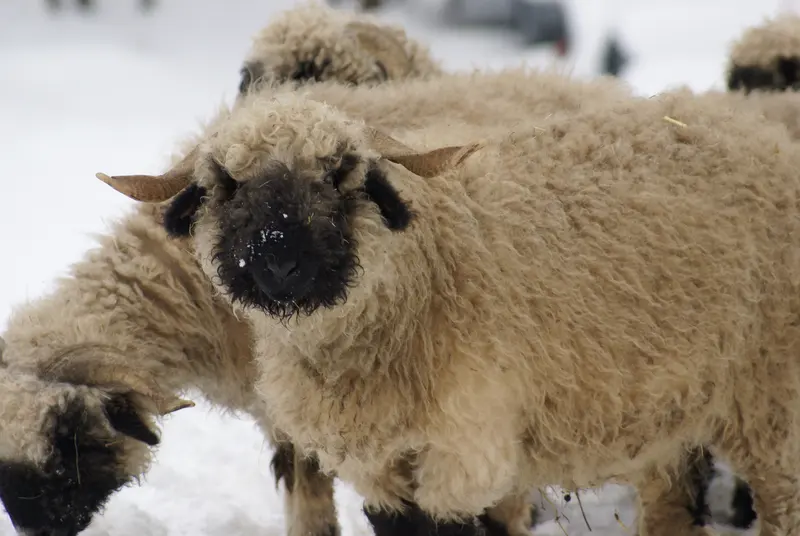
Blacknose Sheep in Zermatt
Where and when to meet the Valais Blacknose — the curly-horned, black-faced sheep of the Matterhorn valley — and how to watch them with respect.
Read guide
Charles Kuonen Suspension Bridge
How to reach and walk the Charles Kuonen suspension bridge above Randa near Zermatt — rail access, the climb from the valley, the bridge itself, head-for-heights notes and weather sense.
Read guide
Easy Walks in Zermatt
Gentle, low-effort walks in and above Zermatt — the village and riverside, the Furi forest, Riffelalp's level paths and the Sunnegga-area strolls — for non-hikers, families and mixed-ability groups.
Read guide