
Blacknose Sheep in Zermatt
Where and when to meet the Valais Blacknose — the curly-horned, black-faced sheep of the Matterhorn valley — and how to watch them with respect.
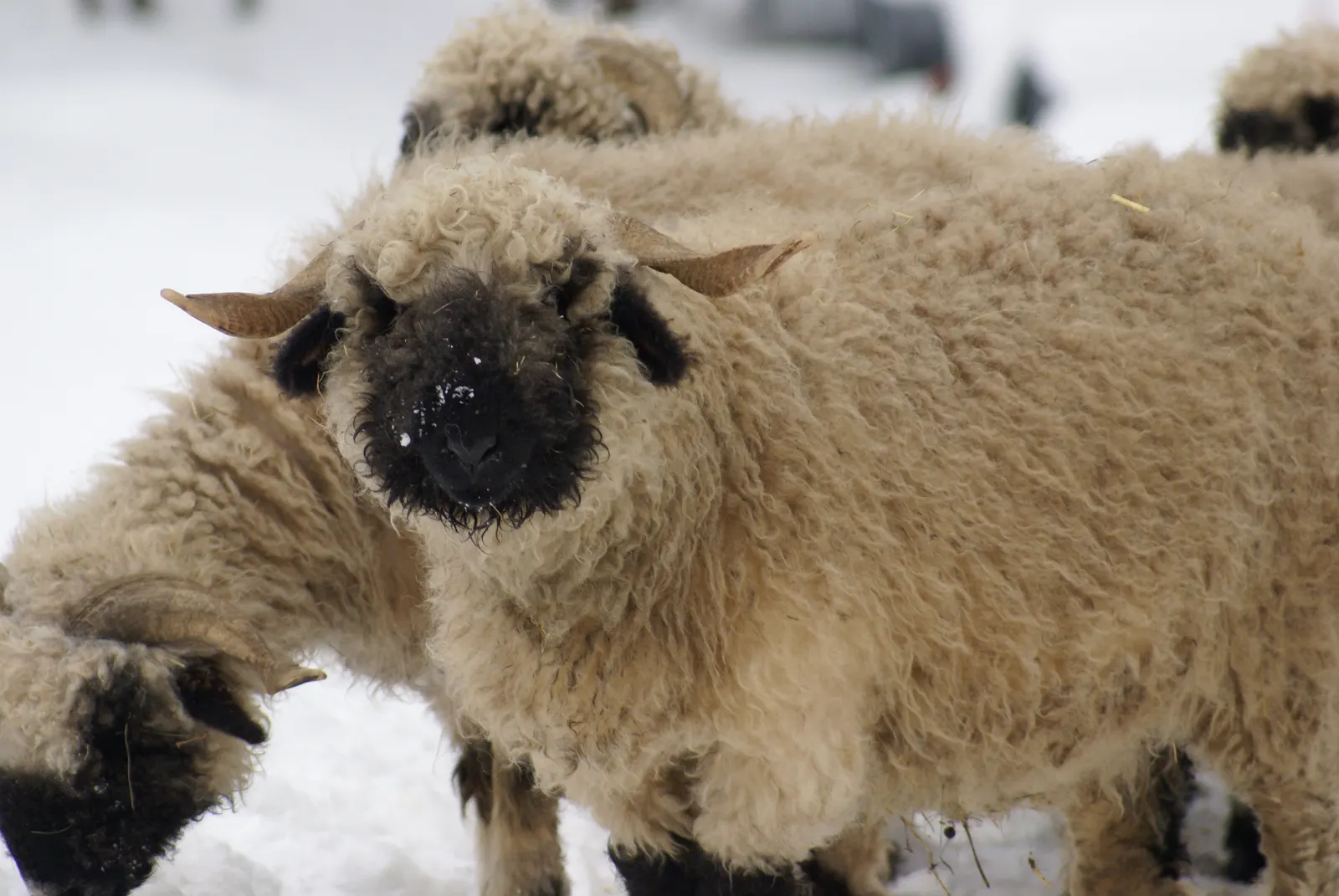
- ✓The Valais Blacknose is a native breed of the Valais canton — black face, black knees, curling horns and a famously thick curly fleece.
- ✓They are summer grazers on the high pastures: you are most likely to meet them on the mountainside from late spring to autumn.
- ✓Look around the Gornergrat line, the Sunnegga side and the meadows above the village rather than on the Bahnhofstrasse.
- ✓They are gentle and used to walkers, but they are working livestock — keep distance, keep dogs leashed and never feed them.
The friendliest face in the Valais
Few animals look as improbably charming as the Valais Blacknose. Picture a thick, cream-white fleece in soft ringlets, a coal-black face you can barely find the eyes in, black knees and feet, and a pair of spiralled horns on both rams and ewes — a sheep that seems half teddy bear, half heraldic beast. They are a genuinely old breed of this canton, raised here for centuries for wool and meat on slopes too steep and stony for almost anything else, and they have become one of the quiet emblems of the Matterhorn valley.
For visitors they are pure delight: placid, curious and entirely unbothered by hikers, they turn an ordinary descent into a moment you stop and grin at. Children adore them, photographers love the contrast of black face against white curls and grey rock, and the soft-toy versions fill the souvenir shops down in the village. But the real ones are best met on their own ground, on the high pastures where they actually live.
When and where to see them
Blacknose sheep follow the alpine year. Through the warm months they are turned out onto the high summer pastures — the alp — to graze the short, flowery turf, which is exactly when and where walkers cross paths with them. From late spring into autumn you can reasonably hope to find flocks on the open mountainsides; in the depths of winter they are wintered down in barns and lower ground, out of sight of most visitors. There is no ticketed enclosure and no guaranteed sighting: this is grazing livestock on a working mountain, so finding them is part luck, part knowing roughly where to look.
The strongest odds are on the grassy shoulders rather than the rock and ice. The meadows along the lower Gornergrat railway, the slopes around Sunnegga and Blauherd on the eastern side of the valley, and the pastures immediately above the village are all classic Blacknose country in summer. Ride a lift to gain height, then walk a gentle traverse and let the flock find you — they often graze close to the marked paths and barely lift their heads as you pass.
- Season: roughly late spring to autumn on the high pastures; wintered indoors and lower down in the cold months.
- Best zones: lower Gornergrat meadows, the Sunnegga–Blauherd side, and pastures just above the village.
- No fixed enclosure or fee — sightings depend on where the flocks are grazing that week.
- Mornings and the cooler hours often find them grazing actively and close to the trails.
How to watch them well
These are tame-looking animals, but they are not pets and not part of an attraction — they belong to local farmers and have a job to do on the mountain. The kindest and most rewarding way to enjoy them is to slow down and let them stay calm. Keep a respectful distance, move quietly, and resist the urge to herd a photogenic ewe into a better background; a relaxed, grazing flock makes a far lovelier photo than a startled one anyway.
Above all, do not feed them. Human snacks are bad for ruminant stomachs, and a sheep that learns to associate walkers with food becomes a nuisance and, eventually, a problem for the farmer. If you are walking with a dog, keep it leashed near livestock as a basic courtesy and a legal expectation on alpine pastures. And remember you may be crossing fenced grazing ground: leave gates as you find them, stay on the marked paths, and treat the pasture as someone's livelihood, because it is.
- Keep your distance and stay calm — let them graze; don't chase or corner them for a shot.
- Never feed them; human food harms them and creates bad habits.
- Dogs on leads around livestock; close gates behind you and stay on marked paths.
- They're working animals owned by local farmers — admire, don't handle.
Making a half-day of it with kids
Blacknose sheep make a brilliant target for a relaxed family outing, precisely because they ask so little. Take the funicular or a lift to gain altitude, pick a gentle, well-marked traverse, and turn the walk into a slow hunt for the flocks — small children who tire of 'a view' will happily march another kilometre on the promise of finding the curly sheep. Pair the search with a picnic on a meadow or a mountain restaurant terrace and you have an easy, low-effort day that still feels like proper alpine time.
If the flocks prove elusive — they move with the grazing and the weather — the village softens the disappointment. The souvenir shops are full of Blacknose plush toys and postcards, and the breed turns up on everything from chocolate wrappers to shop signs. It is a gentle introduction to the working life of the mountain, and a reminder that the valley's appeal is not only the great peak but the small, woolly, faintly comic creatures grazing beneath it.
An old breed with a new global fame
Part of what makes meeting a Blacknose so satisfying is knowing how far its fame now reaches. For most of its history this was a strictly local animal — a hardy, dual-purpose breed of the upper Valais, kept for coarse wool and meat on terrain where softer breeds would not survive. The thick, lanolin-rich, curly fleece sheds rain and holds warmth through cold mountain nights; the sure feet and stocky build suit steep, broken ground; and the placid temperament made the sheep manageable on isolated alps. None of that was glamorous. It was simply a breed shaped, over centuries, by the exact conditions you can see around you on the slope.
In recent years, though, the Valais Blacknose has become something of an international celebrity, sometimes billed as 'the world's cutest sheep' and exported to breeders and hobby farms well beyond Switzerland. That fame has had a happy side effect for visitors: the breed's profile, and pride in it, is higher than ever in its home valley, so the animals you meet above Zermatt are not a relic but a living, valued part of local farming. The plush toys in the shop windows are the modern echo of a very old relationship between these valleys and their flocks.
It is worth holding both ideas at once on the mountain: the sheep is genuinely charming, and it is genuinely a working farm animal with a long, practical history. That doubleness — heritage breed and internet darling — is a neat little window into how Zermatt itself balances a centuries-old mountain culture with a thoroughly modern tourist economy.
- A centuries-old upper-Valais breed kept for coarse wool and meat.
- The thick curly fleece and sure feet are adaptations to steep, cold, wet ground.
- Now internationally famous and exported well beyond Switzerland.
- The fame raises the breed's profile at home — these are valued working animals, not relics.
Telling sheep from goats, and timing your luck
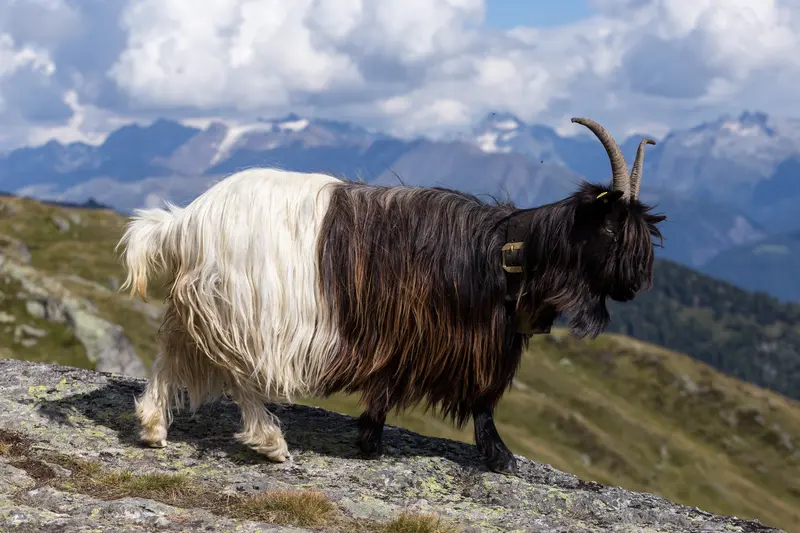
Visitors often muddle Zermatt's two famous black-and-white animals, so it helps to fix the difference. The Blacknose is a sheep: a rounded, cream-fleeced, black-faced body with spiral horns, met out on the high pastures where it grazes through the summer. The other beast you may have heard of is the Valais Blackneck goat — leggy, long-haired, split sharply black-at-the-front and white-at-the-back — which is the breed walked in a herd up the village's main street on summer mornings. Sheep on the mountain, goats on the Bahnhofstrasse: that is the rough rule, and knowing it saves disappointment when the morning goat parade turns out not to be the curly sheep you came for.
For the sheep specifically, timing is mostly about the grazing calendar and a bit of patience. Aim for the heart of the summer season, gain height by lift, and accept that the flocks roam — what grazes a particular meadow one week may have moved by the next. Ask at the tourist office or your hotel whether anyone knows where the flocks are pasturing, check the cooler hours of the day when sheep tend to graze actively, and treat any sighting as a bonus rather than a booking. The hunt is half the fun, and the meadows, lakes and Matterhorn views are reward enough even on a sheepless afternoon.
- Blacknose sheep graze the high pastures; the Blackneck goats parade the village street.
- Aim for high summer, gain height by lift, and expect the flocks to roam.
- Ask locally where the flocks are pasturing that week before setting out.
- Treat a sighting as a bonus — the meadows and views reward the walk regardless.

Gornergrat Guide
The cog railway, the viewpoints, Riffelsee, the Kulmhotel, the mountain restaurants and the weather strategy for the highest open-air railway station in Europe.
Read guide
Best Family Hikes in Zermatt
Child-friendly hikes in Zermatt chosen by lift access, gentle effort, picnic and lake stops, playground rewards and an easy weather backup — so the whole family enjoys the mountain.
Read guide
Zermatt With Kids
Family-friendly lifts, Wolli Park, Leisee, easy walks, the Matterhorn Museum, sledging and low-stress mountain days in a car-free village built for small legs.
Read guideMore in Hiking & Summer
6
Best Gornergrat Hikes
Scenic walking off the Gornergrat cog railway, where every intermediate station is an escape. The ridge descent to Riffelsee and Rotenboden, the longer Riffelberg and Riffelalp routes, and how the train-stop flexibility lets you walk as much or as little as the day allows.
Read guide
Best Hikes in Zermatt
A comparison of Zermatt's finest walks read the way the valley works — by altitude, lift access and weather. The Five Lakes loop, the Matterhorn Glacier Trail, the Gornergrat ridge and the gentler valley paths, ranked by difficulty, view and who they suit.
Read guide
Charles Kuonen Suspension Bridge
How to reach and walk the Charles Kuonen suspension bridge above Randa near Zermatt — rail access, the climb from the valley, the bridge itself, head-for-heights notes and weather sense.
Read guide
Easy Walks in Zermatt
Gentle, low-effort walks in and above Zermatt — the village and riverside, the Furi forest, Riffelalp's level paths and the Sunnegga-area strolls — for non-hikers, families and mixed-ability groups.
Read guide
Five Lakes Walk Guide
Zermatt's most-loved easy hike, lake by lake — how to reach the start by funicular and gondola, which way to walk, where the Matterhorn reflects, how long it takes and the dawn timing that makes the picture.
Read guide
Furi Area Guide
The Matterhorn-side hamlet and lift junction above Zermatt — gentle forest walks, the suspension bridge, the Gorner Gorge, terrace restaurants and an easy family half-day, all reached on foot or by cable car.
Read guide