
Wildflower Hikes in Zermatt
Where and when to walk among alpine flowers around Zermatt — the meadows above Sunnegga and Findeln, the lake paths, the larch slopes — with timing, lift access and the gentle rules of a protected mountain.

- ✓Zermatt's alpine meadows bloom in waves from late spring on the valley floor to high summer above 2,500 m — June and July are the heart of it.
- ✓The Sunnegga and Blauherd side, the Findeln hamlet meadows and the lake paths hold the richest, most accessible flower walking.
- ✓Look for alpenrose, gentian, alpine aster, and — high and rare — the protected edelweiss; pick nothing and stay on the path.
- ✓Read the flowers by altitude: ride a lift for the height, then walk a gentle traverse through the bloom rather than climbing to it.
A mountain that blooms in waves
There is a short, intense season when the high country around Zermatt stops being only about rock and ice and turns, for a few warm weeks, almost impossibly soft. The meadows fill with colour, the larch slopes hum with bees, and the same trails that deliver glaciers and four-thousanders deliver instead a tide of alpine flowers rising up the valley with the warming air. It is one of the least-shouted-about pleasures of the place, and for a certain kind of walker — slow, curious, happy to kneel in the grass — it is the best reason of all to come in early summer.
The crucial thing to understand is that the bloom does not happen everywhere at once. Zermatt is a vertical place, and its flowers obey the same logic as everything else here: they climb. As the snowline retreats up the mountain through late spring and early summer, the flowering follows it, so the valley-floor meadows and the larch woods go first, then the slopes around Sunnegga and Findeln, and finally — often not until July — the high pastures up towards Blauherd and Stellisee. Time your walk to the altitude where the season has just arrived, and you catch the meadows at their most riotous.
This guide reads the flower walking the way the valley actually works: by height and by lift, with the gentlest, richest meadows gathered first and the higher, rarer ground after. None of it asks for a hard climb. The trick, as ever in Zermatt, is to let a funicular or a gondola do the ascending and to walk a soft traverse through the bloom with the Matterhorn somewhere over your shoulder.

At a glance: planning a flower walk
A quick way to match the bloom to your trip. Heights, flower names and lift names are evergreen; the exact peak of the flowering shifts year to year with the winter snowpack and the spring warmth, so treat the timing as a guide and confirm trail and lift conditions before you set out.
- Best months: roughly mid-June to late July for the high meadows; valley and larch slopes flower a little earlier.
- Richest ground: the Sunnegga–Blauherd side, the Findeln meadows, and the Five Lakes lake paths.
- Star species: alpenrose (alpine rose), gentian, alpine aster, globeflower, and the rare, protected edelweiss high up.
- Effort: easy to moderate — ride a lift for the height, walk a gentle traverse through the bloom.
- Lift access: the Sunnegga Express funicular and the Blauherd gondola put you among the meadows fast.
- Footwear: walking shoes are fine on the gentler paths; boots for the higher, rougher traverses.
- Golden rule: pick nothing, stay on the path, and give grazing animals space.
- Time needed: a relaxed half-day per side; a full day if you string the lake paths together.
The Sunnegga and Blauherd meadows — the easy heart of it
If you do one flower walk, make it this side. The Sunnegga Express funicular climbs from the village in a couple of minutes and sets you down at around 2,290 m, on slopes that in late June and July run thick with alpenrose — the deep-pink alpine rose that washes whole hillsides in colour — alongside gentian, alpine aster and the broad meadow flowers that thrive on grazed, sunlit pasture. From Sunnegga a gondola lifts you on to Blauherd at roughly 2,571 m, higher and a touch later in its season, where the bloom carries on among the boulders and the short turf.
The walking here is forgiving. The lower section of the Five Lakes loop traces these meadows on a gentle, well-marked line, and even families with small children can manage the stretch from Blauherd down past Stellisee and on towards Leisee, the bathing lake just below Sunnegga. Go in the morning for the calm light and the still lakes, take your time, and let the flowers — not the mileage — set the pace. This is flower walking at its most generous: high colour, big peaks, and almost no climbing.


Findeln and the larch-meadow hamlets
Below Sunnegga, the hamlet of Findeln sits among some of the most photographed meadows in the valley — a scatter of dark timber chalets and mountain restaurants strung across south-facing slopes that, in flower season, become a tapestry of colour with the Matterhorn standing clear behind. The marked paths that thread between the chalets are gentle and short, and the genius of Findeln is that you can pair the flowers with a long terrace lunch: settle on a sunny deck with the meadow falling away below you and the peak filling the sky, and let the afternoon go.
The larch slopes around and below Findeln add another layer to the season. In late spring the woods are full of the fresh, almost luminous green of new larch needles and the early flowers of the forest floor; by autumn the same larches turn butter-gold, which makes this corner rewarding well beyond the high-summer bloom. For a relaxed flower-and-lunch outing, walk down from Sunnegga to Findeln through the meadows, eat, and continue gently down towards the village on the forest paths.

The lake paths — flowers, water and reflections
The Five Lakes Walk doubles as a flower walk for much of its length. Linking Stellisee, Grindjisee, Grünsee, Moosjisee and Leisee on the Sunnegga side, the loop runs through high meadow, marshy lake-edge ground and stony slopes, each of which grows its own flowers — cottongrass nodding white at the boggy margins, gentian and aster on the dry banks, and alpenrose washing the slopes between. The reward is doubled when the lakes are still: the Matterhorn reflected above, the meadow flowers nodding in the foreground, the whole picture quietly perfect.
Stellisee, the first and most famous of the lakes, gives the cleanest reflection on a calm morning and the richest surrounding meadow in late June and July. Grindjisee, lower and more sheltered, is a quieter favourite, its larch-fringed water often the most beautifully framed of the five. Walk the loop slowly, anticlockwise and early, and you get the reflections, the flowers and the calm before the day's crowds arrive — three pleasures for the effort of one gentle half-day.
What you'll see — and the rare ones
The signature flower of the Zermatt slopes is the alpenrose, the alpine rose, whose deep-pink blossom covers whole hillsides on acidic, snow-fed ground in late June and July; catch a slope of it in full flower and you will not forget it. Among and below it you will find the intense blue of gentians, the lilac stars of alpine aster, the yellow globes of globeflower in damper meadows, white cottongrass at the boggy lake margins, and dozens of smaller, low species hugging the turf and the rocks. A small flower guide or an app turns the walk into a treasure hunt; the variety on a single good slope is astonishing.
The famous one, of course, is edelweiss — the small, woolly, star-shaped flower of high, stony ground that has become the emblem of the Alps. It grows here, but high and sparse, on rocky alpine terrain rather than in the soft lower meadows, and finding it takes height, patience and luck. It is also protected, as are many alpine flowers in this part of Switzerland, which matters: edelweiss and its kind are admired and photographed, never picked. If you want to be sure of seeing it without the search, the Alpine flowers are also displayed and explained at curated gardens in and around the valley — a gentle, certain alternative to hunting the high slopes.

Walk gently: the rules of a protected mountain
Alpine meadows are fragile, slow-growing and, in many cases, legally protected, so flower walking comes with a quiet code that every responsible walker keeps. Stay on the marked paths — a meadow trampled flat takes years to recover, and the flowers you came for are the first casualties. Pick nothing: many alpine species, edelweiss among them, are protected by law, and even the unprotected ones are part of a living slope, not a bouquet. Photograph instead, and leave the bloom for the next walker.
The meadows are also working pasture. You will share them with grazing cows, goats and the valley's famous blacknose sheep, and with the farmers who cut the hay that keeps the high slopes flowering year after year. Give the animals space, keep dogs under close control, and close any gates you open. None of this is onerous — it is simply the difference between visiting a mountain and looking after it — and it is part of why these slopes still bloom the way they do.
- Stay on the marked paths — trampled meadow recovers slowly and kills the flowers first.
- Pick nothing: edelweiss and many alpine species are protected by law.
- Photograph, don't gather — leave the bloom for the next walker.
- Give grazing animals room, keep dogs close and shut the gates you open.
- Carry out everything you carry in, including organic scraps.
Season, weather and what to carry
The flowering season is short and weather-dependent. As a rule the valley floor and larch slopes go first, from late spring; the Sunnegga and Findeln meadows hit their stride through mid- to late June; and the highest pastures up towards Blauherd and Stellisee often do not peak until July. A heavy winter pushes everything later, a warm spring brings it forward, so treat any date as a guide and ask locally — the lift stations and the tourist office track the season — if you are timing a trip around the bloom.
Even a gentle flower walk is high alpine ground. The sun is fierce at altitude, afternoon thunderstorms build fast over the peaks in summer, and the weather can turn cold quickly however soft the morning. Carry sun protection that takes the height seriously, a windproof layer, plenty of water and some food, and check the morning's forecast and the lift calendar before you commit — the same funiculars and gondolas that carry you up to the meadows run to a seasonal timetable. Walk early, be off the high ground by mid-afternoon, and let the flowers be the whole unhurried point of the day.
- Timing: valley first, Sunnegga/Findeln mid–late June, the high pastures often into July (varies by year).
- Summer afternoons bring thunderstorms — start early, be off the tops by mid-afternoon.
- Carry sun protection, a windproof, water, food and a checked weather and lift forecast.
- Confirm the funicular and gondola calendar before planning a walk around riding up.

Zermatt Lakes Guide
Compare Zermatt's mountain lakes — Stellisee, Riffelsee, Leisee, Grünsee, Grindjisee and more — by Matterhorn view, access, effort and whether you come to photograph, swim or simply sit.
Read guide
Five Lakes Walk Guide
Zermatt's most-loved easy hike, lake by lake — how to reach the start by funicular and gondola, which way to walk, where the Matterhorn reflects, how long it takes and the dawn timing that makes the picture.
Read guide
Zermatt in June
June is the month Zermatt tips from spring shoulder into summer — lifts and mountain restaurants reopen, the lower trails clear, wildflowers fill the meadows and the high lakes are still thawing. Calm, green and very good value before the July crowds.
Read guideMore in Hiking & Summer
6
Best Family Hikes in Zermatt
Child-friendly hikes in Zermatt chosen by lift access, gentle effort, picnic and lake stops, playground rewards and an easy weather backup — so the whole family enjoys the mountain.
Read guide
Best Gornergrat Hikes
Scenic walking off the Gornergrat cog railway, where every intermediate station is an escape. The ridge descent to Riffelsee and Rotenboden, the longer Riffelberg and Riffelalp routes, and how the train-stop flexibility lets you walk as much or as little as the day allows.
Read guide
Best Hikes in Zermatt
A comparison of Zermatt's finest walks read the way the valley works — by altitude, lift access and weather. The Five Lakes loop, the Matterhorn Glacier Trail, the Gornergrat ridge and the gentler valley paths, ranked by difficulty, view and who they suit.
Read guide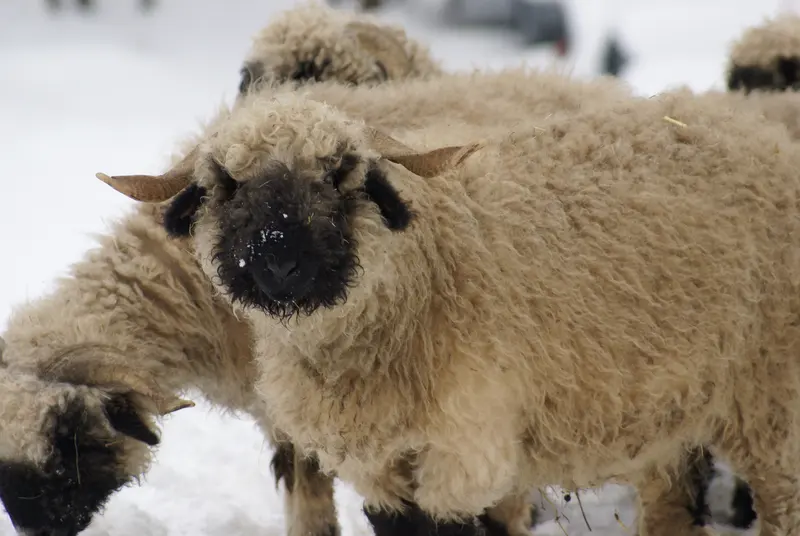
Blacknose Sheep in Zermatt
Where and when to meet the Valais Blacknose — the curly-horned, black-faced sheep of the Matterhorn valley — and how to watch them with respect.
Read guide
Charles Kuonen Suspension Bridge
How to reach and walk the Charles Kuonen suspension bridge above Randa near Zermatt — rail access, the climb from the valley, the bridge itself, head-for-heights notes and weather sense.
Read guide
Easy Walks in Zermatt
Gentle, low-effort walks in and above Zermatt — the village and riverside, the Furi forest, Riffelalp's level paths and the Sunnegga-area strolls — for non-hikers, families and mixed-ability groups.
Read guide