
Zermatt Lakes Guide
Compare Zermatt's mountain lakes — Stellisee, Riffelsee, Leisee, Grünsee, Grindjisee and more — by Matterhorn view, access, effort and whether you come to photograph, swim or simply sit.

Photo: Pascal Debrunner / Unsplash
- ✓Zermatt's mountain lakes split into two kinds: still reflection tarns to photograph and a family lake, Leisee, to swim in.
- ✓Stellisee and Riffelsee give the cleanest Matterhorn reflections — both best at dawn, on windless air.
- ✓Most of the lakes link on the Five Lakes Walk, reached via the Sunnegga funicular and the Blauherd lift.
- ✓Every lake is high, exposed alpine ground; go early for the stillest water and check the lift timetable and weather.
Two kinds of lake, one mountain
Zermatt is ringed by mountain lakes, and almost every one of them owes its fame to the same thing: the Matterhorn standing close enough, and at the right angle, to fall into the water. But the lakes are not interchangeable, and choosing the right one for your morning is the difference between a queue of tripods and a private dawn, or between a photo stop and a swimmable afternoon. Broadly they divide into two families — the high, still reflection tarns you come to photograph, and the one family lake, Leisee, you come to swim in — with a handful of quieter pools in between that reward walkers more than camera crews.
This guide reads them side by side, by the things that actually decide your day: how good the Matterhorn view is, how hard the lake is to reach, how much effort it asks, and whether you are there to photograph, paddle or simply sit. Most of the famous ones connect on a single loop — the Five Lakes Walk — so you rarely have to choose just one, but knowing their character lets you point the day at the lake that suits your weather, your legs and your party.
At a glance: the lakes compared
A quick reckoner. Heights and character are evergreen; confirm lift and railway timetables, the published walking times and current conditions before you set out.
- Stellisee (~2,537 m): the finest Matterhorn reflection; near Blauherd above Sunnegga; easy walk, dawn best.
- Riffelsee (~2,757 m): the classic doubled summit; below Rotenboden on the Gornergrat railway; short walk, dawn best.
- Leisee (~2,232 m): the family swimming lake; below Sunnegga; shallow, sun-warmed, playground and kids' trail.
- Grindjisee (~2,334 m): small, sheltered and quiet; on the Five Lakes Walk; lovely reflections, fewer people.
- Grünsee (~2,300 m): a wilder, greenish lake; on the Five Lakes Walk; more about wild setting than mirror.
- Moosjisee (~2,135 m): a turquoise reservoir-fed pool; on the Five Lakes Walk; striking colour, not a swim spot.
- Best overall reflection: Stellisee, then Riffelsee. Best for families: Leisee. Quietest: Grindjisee.

Stellisee: the best reflection
If you come to Zermatt for one lake reflection, make it Stellisee. Sitting at roughly 2,537 m above Sunnegga, near the top of the Blauherd lift, it gives the cleanest, most complete mirror of the Matterhorn of any lake in the valley — the whole pyramid laid out upside down in the water on a calm morning, with an easy, short walk from the lift to reach it. It is the picture that draws photographers from around the world, and the centrepiece of the Five Lakes Walk.
Its fame is also its catch: it is popular, and a clear summer dawn can bring a row of tripods. The reflection, like all of them, needs still air, which means the prize hour is as soon after sunrise as you can manage, before the breeze gets up — which conveniently also beats the crowd. Ride up early, walk the few minutes to the shore, and give it time to glass over between gusts.
Riffelsee: the classic, reached by cog
Riffelsee is the other great reflection, and the one most people picture when they imagine the doubled Matterhorn. It sits at about 2,757 m below the Gornergrat ridge, reached not by the Sunnegga lifts but by the Gornergrat cog railway — get off at Rotenboden, one stop below the summit, and the lake is a few minutes' walk down. The reflection here is famously symmetrical, and it pairs beautifully with the summit panorama at Gornergrat just above, so you can take in two of the region's headline views in a single ride.
Because it is served by the railway rather than the Sunnegga lifts, Riffelsee belongs to a different day than the Five Lakes — a Gornergrat day — and it suits walkers who want to descend the ridge from the summit past the lake to Riffelberg. The timing rule is identical, though: still air at dawn makes the mirror, and a breeze breaks it.

Leisee: the one you swim in
Not every Zermatt lake is for photographs and silence. Leisee, just below the Sunnegga station, is the family lake — shallow, sun-warmed and made for paddling and swimming, with a lakeside playground, the Wolli kids' adventure trail and picnic meadows around it. It is the easiest of all the lakes to reach, a few minutes from the village by the underground funicular, and the only one where the plan is to spend the afternoon rather than catch the dawn. On a still morning it reflects the Matterhorn too, so it doubles as the most accessible photo lake in the valley.
For families it is simply the best of the bunch: real alpine scenery, the Matterhorn behind, and water a child can safely play in, all without a hike. It is also the gentle reward at the end of the Five Lakes Walk, where tired walkers cool their feet before the funicular home.

The quieter lakes: Grindjisee, Grünsee and Moosjisee
Beyond the two famous mirrors and the family lake, the Five Lakes Walk strings together a trio of quieter pools, each with its own character. Grindjisee, small and sheltered among larch and alpine rose, is a connoisseur's lake — it gives a lovely, less-photographed reflection and sees far fewer people than Stellisee, making it a favourite for those who want the mirror without the crowd. Grünsee, the 'green lake', sits in a wilder, more open setting and is more about its raw alpine surroundings than a clean reflection. Moosjisee, lower down and fed by glacier melt, glows an arresting turquoise that comes from rock flour in the water rather than any reflection — striking to look at, but not a place to swim.
Together these three give the Five Lakes Walk its variety: you pass from the perfect mirror of Stellisee through the quiet of Grindjisee, the wildness of Grünsee, the glacial colour of Moosjisee, and finish at swimmable Leisee — five distinct lakes in a single, mostly downhill loop. It is the best way to understand the lakes as a family rather than a checklist, and to find the one whose mood matches yours.
When to go: season, hour and weather
Timing shapes a lake day more than any other choice. The reflection lakes live and die on still air, and the air is stillest in the hours just after sunrise — through the night the high air settles, and as the sun warms the valley a breeze gets up and ripples the surface. So the prize for Stellisee, Riffelsee and Grindjisee is an early start: cold, clear, calm, and ahead of both the wind and the crowd. Watch the forecast for a day or two, then spend the settled morning on the lake you most want to photograph.
Season matters too. These are high-mountain pools, so most are at their best from roughly late spring, once the surfaces have thawed and the surrounding ground has cleared of snow, through autumn — when golden larches make the quieter lakes especially lovely. Early in the season snow can still rim the shore and cover the higher paths; Leisee's swimming window is shorter still, summer-bound, when the shallows warm enough for children. Whenever you go, the weather has the final word: cloud can swallow the peak while the village basks, and afternoon build-up is common in summer, so plan the lakes for the morning and keep the day flexible.

How to choose — and the rules that apply to all of them
Pick by purpose. For the single best reflection on an easy walk, go to Stellisee; for the classic doubled summit on a Gornergrat day, Riffelsee; for swimming and children, Leisee; for quiet and solitude, Grindjisee. If you want the whole spectrum, walk the Five Lakes loop and let each pool make its own case. And if you only have a clear morning and a camera, the rule is simple: ride up at dawn to Stellisee or Riffelsee and beat both the wind and the crowd.
Whichever you choose, the same disciplines apply. Reflections need still air, and air is stillest soon after sunrise, so early is always better. Every lake here is high, exposed alpine ground — bring sun protection, warm and windproof layers, water and proper footwear, even for an 'easy' lake. The open swimming season at Leisee is short and summer-bound, and the high lakes can hold snow into early summer. Above all, keep the lift and railway timetables open and let the weather, not the itinerary, decide which lake you spend the morning beside.


Blauherd & Stellisee Guide
The Sunnegga-side reflection lake and the lift station that reaches it — how Blauherd and Stellisee fit together, the short walk down, the dawn timing and the Five Lakes routing that makes the picture.
Read guide
Leisee Guide
Zermatt's family lake just below Sunnegga — a shallow, sun-warmed pool for paddling and swimming, with a lakeside playground, the Wolli kids' trail, picnic meadows and the Matterhorn doubled in the water.
Read guide
Riffelsee Guide
The reflection lake below Gornergrat where the Matterhorn doubles in still water — how to get there, when to go, the short walk and the timing that makes the picture.
Read guideMore in Hiking & Summer
6
Best Family Hikes in Zermatt
Child-friendly hikes in Zermatt chosen by lift access, gentle effort, picnic and lake stops, playground rewards and an easy weather backup — so the whole family enjoys the mountain.
Read guide
Best Gornergrat Hikes
Scenic walking off the Gornergrat cog railway, where every intermediate station is an escape. The ridge descent to Riffelsee and Rotenboden, the longer Riffelberg and Riffelalp routes, and how the train-stop flexibility lets you walk as much or as little as the day allows.
Read guide
Best Hikes in Zermatt
A comparison of Zermatt's finest walks read the way the valley works — by altitude, lift access and weather. The Five Lakes loop, the Matterhorn Glacier Trail, the Gornergrat ridge and the gentler valley paths, ranked by difficulty, view and who they suit.
Read guide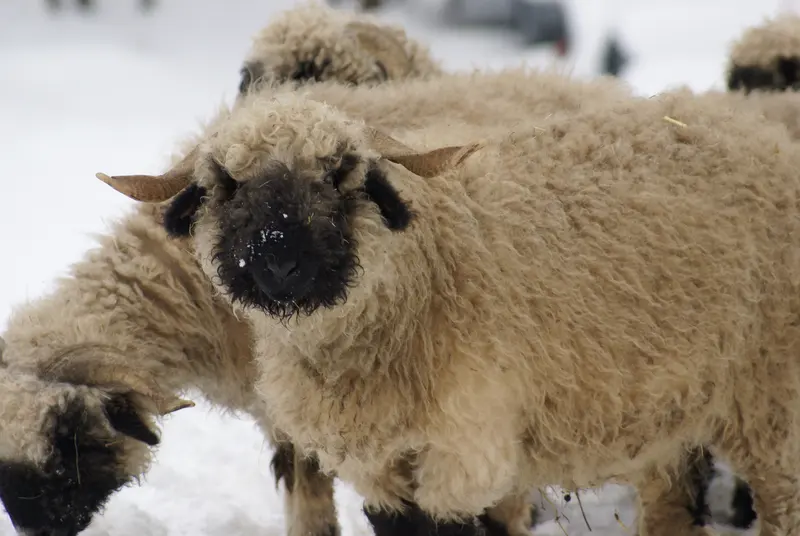
Blacknose Sheep in Zermatt
Where and when to meet the Valais Blacknose — the curly-horned, black-faced sheep of the Matterhorn valley — and how to watch them with respect.
Read guide
Charles Kuonen Suspension Bridge
How to reach and walk the Charles Kuonen suspension bridge above Randa near Zermatt — rail access, the climb from the valley, the bridge itself, head-for-heights notes and weather sense.
Read guide
Easy Walks in Zermatt
Gentle, low-effort walks in and above Zermatt — the village and riverside, the Furi forest, Riffelalp's level paths and the Sunnegga-area strolls — for non-hikers, families and mixed-ability groups.
Read guide