
Zermatt in July
July is the heart of the Zermatt hiking summer — high trails and lakes open, summer skiing on the glacier, warm valley days, Blacknose sheep in the meadows and the buzz of the high-altitude marathon. Busier paths, but the mountain at its fullest.

Photo: Ilia Bronskiy / Unsplash
- ✓July is peak hiking season — the high trails, the Five Lakes Walk and the Gornergrat ridge are open and the mountain lakes have thawed to mirror-still.
- ✓Summer skiing runs on the glacier above Trockener Steg, so you can ski on snow in the morning and hike in meadows the same afternoon.
- ✓The village is at its warmest and busiest of the summer; popular trails and the early cog reward an early start to beat both crowds and afternoon storms.
- ✓July carries real summer energy — the high-altitude Gornergrat Zermatt Marathon, the curly-horned Blacknose sheep in the pastures and long, bright alpine evenings.
High summer, in full
July is Zermatt's summer at full volume. The snow has pulled back from all but the very highest trails, the mountain lakes have thawed to the mirror-still surfaces that make the photographs, and the whole network of marked paths — more than four hundred kilometres of it — is open and dry. The headline walks come into their own: the Five Lakes loop with its Matterhorn reflection at Stellisee, the Gornergrat ridge among the four-thousanders, the Matterhorn Glacier Trail across the ice-carved upper valley. If you came to Zermatt to hike, this is the month the village was built for.
It is also the warmest and busiest summer stretch, and the two facts are linked. Valley days are pleasantly warm, the terraces are full, and the most famous trails carry real foot traffic at midday. None of that spoils the place — Zermatt absorbs crowds across a big mountain — but it does reward planning. Start early, both to have the popular paths and the reflection lakes to yourself in the calm of the morning and to be off the high, exposed ground before the afternoon weather builds. July is the month to be out at dawn and lingering on a terrace by lunch.

At a glance — Zermatt in July
A quick read on the month before the detail. Event dates and lift calendars move year to year, so treat this as evergreen guidance and verify current dates before you book around any of them.
- Season: peak hiking summer — high trails, ridges and lakes open and dry.
- Summer skiing: the glacier above Trockener Steg runs morning ski sessions; ski and hike in one day.
- Crowds: the busiest summer window alongside August — start popular walks early.
- Weather: warm valley days, cold high nights, and reliable afternoon cloud and thunderstorm build-up.
- Wildlife & colour: curly-horned Blacknose sheep in the high pastures, meadows still green and flowering.
- Event: the Gornergrat Zermatt Marathon, a high-altitude road and trail race — verify the year's date if you want to watch or run.
- Prices: high-season summer rates; book hotels and popular mountain restaurants ahead.
Hiking — the whole network is open
With the snow gone, July gives you the full sweep of Zermatt's trails, and the only real decision is which to prioritise. The Five Lakes Walk links Stellisee, Grindjisee, Grünsee, Moosjisee and Leisee on an easy, lift-served loop, with the reflection at Stellisee best caught early before the breeze ruffles the water. The Gornergrat ridge walks let you ride the cog high and walk a traverse rather than a climb. The Matterhorn Glacier Trail traces the upper valley's ice history. And for families, the lakeside at Leisee above Sunnegga is a warm-enough swim with the peak on the horizon.
Because this is high summer, treat the early start as non-negotiable for the bigger walks. The popular trails are genuinely busy by late morning, and the still water that makes the lake reflections worth the trip is a dawn phenomenon — by midday wind and walkers have both arrived. Even on a warm day this is high alpine ground: carry layers, water and a waterproof, because a clear meadow morning can turn to cloud and a cold wind on an exposed ridge within the hour.
 Best hikes in ZermattThe walks worth prioritising when the whole high network is finally open.
 Zermatt lakes guideThe mountain lakes thawed and mirror-still — where to find the cleanest July reflections.
 Family hikes in ZermattGentle, lift-served walks and the Leisee lakeside for a warm July family day.
Summer skiing and the Blacknose sheep
July is the rare month where you can ski snow and walk meadows on the same day. The glacier above Trockener Steg — the year-round summer-ski terrain — runs morning sessions on high, cold snow, so an early ski before the sun softens it and a meadow lunch afterwards is an entirely doable July combination. It is a novelty for some and a serious training venue for others, but either way it is the cleanest demonstration of Zermatt's vertical range: ice at the top, flowers at the bottom, all in one valley.
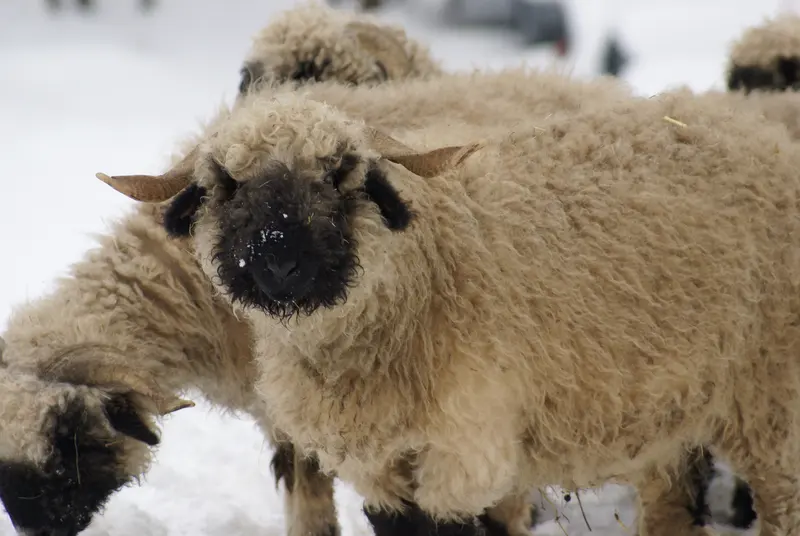
Lower down, July is also when the village's most photogenic residents are out: the Valais Blacknose sheep, with their curly horns and comically woolly black faces, graze the high pastures through the warm months. They are a genuine local emblem rather than a tourist gimmick, and spotting a flock on a hillside walk is one of the small, charming pleasures of a summer day here. Keep your distance, let them be, and enjoy the encounter as part of the working alpine landscape.
Marathon energy and the rhythm of the day
July carries a particular buzz, much of it tied to the high-altitude Gornergrat Zermatt Marathon — a road and trail race that climbs from the valley toward the Gornergrat ridge, one of the toughest and most scenic mountain marathons in the Alps. Whether you come to run it or simply to watch the field grind up toward 3,000 m with the Matterhorn as backdrop, it gives the village a charge of athletic energy. If the date matters to your trip, verify the year's schedule and book accommodation early, because race weekend fills the village.
Around the events, the rhythm of a good July day is the same one the whole high-summer month rewards: out early for the big walk or the glacier ski, off the exposed ground before the afternoon weather, then a long, slow terrace lunch and an easy evening as the light goes gold and the crowds thin. Build in flexibility for the Matterhorn itself — it makes its own cloud and can hide on an otherwise fine afternoon — and spend your clearest morning on the headline viewpoint.
 Gornergrat guideThe cog, the ridge and the viewpoint the high-altitude marathon climbs toward.
 Zermatt weather & visibility guideWhat July weather means for afternoon storms, Matterhorn visibility and timing your day.
 Trail running in ZermattRoutes and race energy for runners drawn to the summer's high-altitude events.
Should you come in July?
Come in July if you want the mountain at its fullest — every high trail open, the lakes thawed and reflecting, summer skiing on tap, long warm days and the lively energy of the season's events. It is the surest month for the headline hikes and the classic Stellisee reflection, and the most reliable for warm valley weather. For a first summer trip that wants to see Zermatt's full range, July is the obvious choice.
The trade-offs are crowds and prices: this is high season, so book hotels and popular mountain restaurants well ahead, expect company on the famous trails, and lean hard on the early start to find the quiet. If you'd rather trade a little warmth for thinner crowds and softer light, September offers a calmer version of the same hiking. But for the full, busy, brilliant heart of the Zermatt summer, July is it.


Zermatt Summer Guide
How to plan Zermatt in the warm months — when the snow pulls back and the village turns to lakes, larch and 400 km of trails. Lifts, hikes, mountain biking, the blacknose sheep, weather, hotels and the timing that keeps you ahead of the crowds.
Read guide
Summer Skiing in Zermatt
How summer glacier skiing works in Zermatt — the morning-only rhythm on the ice above Trockener Steg, who it suits, the pass choices and the weather and altitude limits that govern it.
Read guide
Gornergrat Zermatt Marathon
How to plan a Zermatt Marathon weekend — the uphill course that climbs from the valley to Riffelberg, the distances, the logistics of a car-free finish at altitude, hotels, spectating and recovery beneath the Matterhorn.
Read guideMore in When to Visit
6
Zermatt by month
A month-by-month read on Zermatt — weather, ski conditions, lift windows, hiking, hotel strategy, events and closures — so you can match the season to the trip you want beneath the Matterhorn.
Read guide
Zermatt in August
August is warm, busy, full-summer Zermatt — every trail open, the Folklore Festival in the streets, the Matterhorn Ultraks trail race on the high ridges, and the reliable afternoon thunderstorm to plan around. The village at its liveliest.
Read guide
Zermatt in December
December turns Zermatt festive — the valley ski season opening in earnest, the lit, snow-hushed village at its most romantic, and the Christmas-to-New-Year fortnight bringing the year's highest demand and premium rates. Here is how to read the month and travel it well.
Read guide
Zermatt in June
June is the month Zermatt tips from spring shoulder into summer — lifts and mountain restaurants reopen, the lower trails clear, wildflowers fill the meadows and the high lakes are still thawing. Calm, green and very good value before the July crowds.
Read guide
Zermatt in May
May is Zermatt's deep spring shoulder — the ski season winding down, lifts and mountain restaurants pausing for maintenance, lingering snow up high and a green, quiet, gently priced village. Here is how to read it and travel it well.
Read guide
Zermatt in November
November is Zermatt's deepest low season — the autumn maintenance pause at its widest, the village quiet and gently priced, and the high glacier holding a slice of early skiing while the valley waits for winter. Here is how to read the month and travel it well.
Read guide