
Zermatt in May
May is Zermatt's deep spring shoulder — the ski season winding down, lifts and mountain restaurants pausing for maintenance, lingering snow up high and a green, quiet, gently priced village. Here is how to read it and travel it well.

Photo: Raphael Andres / Unsplash
- ✓May is the quietest, least-open stretch of the Zermatt year — the valley ski season is over and the summer hiking season has not yet begun, so the village is at its calmest and most affordable.
- ✓Many lifts and a good number of mountain restaurants close in May for spring maintenance; the year-round glacier above Trockener Steg keeps a slice of skiing alive for the dedicated.
- ✓Snow lingers on the high trails well into the month, so walking is best kept to the low, green valley paths around the village rather than the famous lake loops.
- ✓It is a village-first month — come for the streets, the museum, the church and an unhurried pace under a still snow-capped Matterhorn, and verify exactly what is running before you build a day around it.
What May actually feels like
May is the long exhale of the Zermatt year. The valley ski season has wound down — the lower runs lose their snow, the festive and spring-ski crowds have gone home — and the great summer hiking machine has not yet started up. What is left is the village itself: car-free, quiet, freshly green along the valley floor, with the Matterhorn still wearing its winter snow above a town that has slowed almost to a stop. For travellers who want the place rather than the full sweep of the mountain, that emptiness is the whole appeal.
Expect a town between seasons. The Bahnhofstrasse is calm, tables are easy to come by, hotel rates sit near their gentlest of the year, and the pace is unhurried in a way high summer never allows. The trade-off is openness: this is the least-open month, with lifts and mountain restaurants moving through their spring maintenance pause and the high trails still under snow. May rewards a particular kind of traveller — one happy to swap the headline viewpoints for a slower, cheaper, more private version of Zermatt.

At a glance — Zermatt in May
A quick read on the month before the detail. Treat all of this as evergreen guidance: lift and restaurant calendars move year to year, so verify current opening before you book a day around any one of them.
- Season: deep spring shoulder — between the valley ski season and the summer hiking season.
- Lifts: many paused for maintenance; the year-round glacier above Trockener Steg typically keeps running — verify the current opening list.
- Hiking: low valley and village walks only; high trails and the famous lake loops are still under snow for most of the month.
- Crowds: among the quietest weeks of the year — easy tables, short queues, calm streets.
- Prices: near the lowest of the year for hotels; an excellent value window if you don't need the full mountain.
- Weather: warming valley days, cold nights, meltwater running high, and a Matterhorn that still makes its own cloud — keep viewpoints flexible.
Lifts and skiing — what stays open
May is the heart of the spring maintenance season, and that is the single most important thing to plan around. Across the month, lifts and a good share of mountain restaurants close in rotation so the cables, stations and machinery can be serviced before summer — the closures shift year to year and even week to week, so a printed plan from a previous trip is no guide. Check the official lift status for your exact dates rather than assuming any particular cable car or cog is turning.
The exception, and the reason a few skiers still come, is the glacier above Trockener Steg, where the year-round summer-ski terrain typically keeps operating. It is high, cold and snow-sure when the valley below has gone green, so a committed skier can usually still find turns — but it is a specialist's outing, not the broad, three-sector ski day of midwinter. If skiing is the whole point of your trip, May is a compromise month; the deep, reliable snow lives in January and February.


Walking in May — keep it low and green
The instinct in any Zermatt month is to head for the lakes and ridges, but in May that instinct will lead you into snow. The Five Lakes Walk, the Gornergrat ridge and the Matterhorn Glacier Trail sit too high to be reliably clear; their lakes are often still frozen or half-thawed, and the trails carry snow patches that turn a gentle marked path into something more serious. Save those for high summer. May walking belongs to the valley floor.
Down low, though, the month can be lovely. The greening meadows, the larch buds and the meltwater-swollen Vispa make the easy paths around the village genuinely pretty, and they are quiet enough to feel like your own. Stick to the gentle, well-signed valley walks — toward Furi and the gorges, around Winkelmatten, along the river — and treat anything that climbs steeply as a snow-check exercise. Even a fine May day is high alpine spring: carry layers, expect mud and meltwater, and turn back from snow rather than push on.
 Easy walks in ZermattGentle, low valley paths that stay walkable in spring while the high trails are under snow.
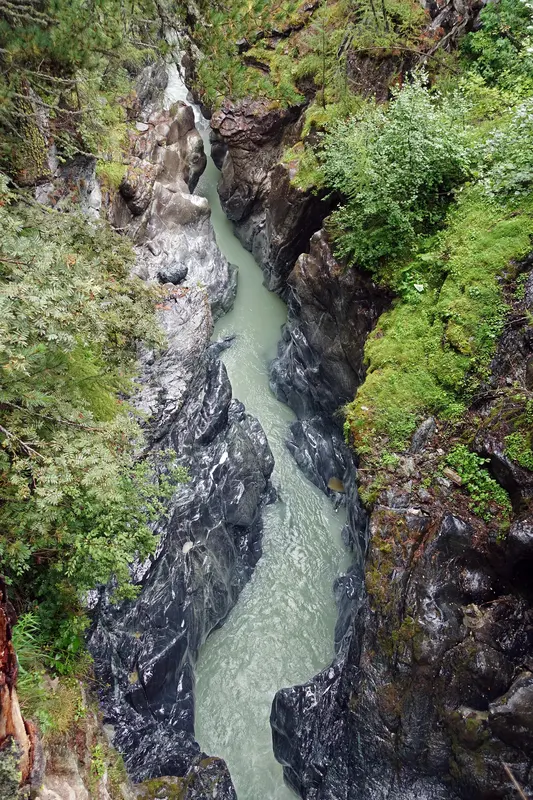 Gorner GorgeA short, dramatic valley-floor walk worth its place on a low-altitude May day.
 Zermatt hiking safetyReading spring snow, meltwater and changeable weather before you head uphill.
Rain, rest days and the village indoors
Spring weather swings, and a quiet May trip is the right time to lean into the village's indoor pleasures rather than fight the sky. The Matterhorn Museum tells the story of the 1865 first ascent and the village that grew around the mountain; the church and the old timbered Hinterdorf reward a slow wander; and the bakeries and cafés along the Bahnhofstrasse are at their most relaxed, with tables and time to spare. A grey day in May is no loss — it is simply the version of Zermatt you came for at a different angle.
Because so much of the mountain is paused, build your May days the other way around from summer: anchor them in the village and treat any clear, warm window as a bonus for a low walk or a glacier-ski morning, rather than planning around a headline viewpoint that may not be open or visible. It is a forgiving, low-stakes way to travel, and it suits couples and slow travellers who would rather sit long over coffee than queue for a cable car.
 Rainy-day & indoor ZermattThe museum, the church, indoor swims and other plans for the days the mountain isn't the point.
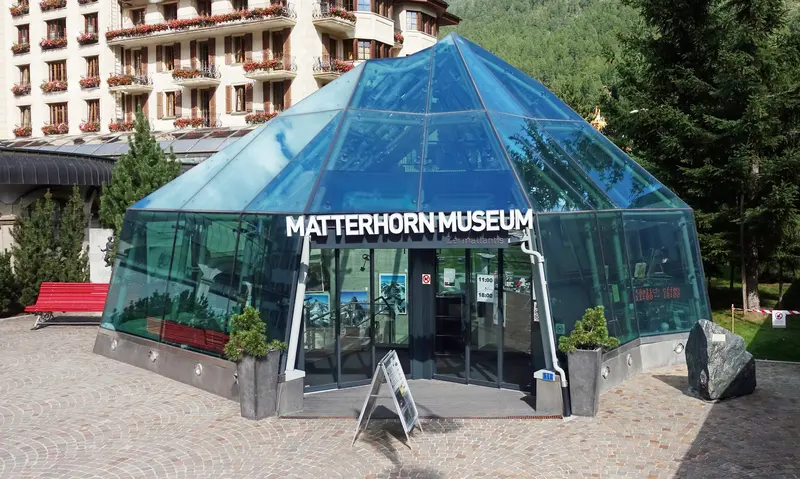 Matterhorn MuseumThe story of the 1865 first ascent and the village beneath the Horu — a fine spring rest-day stop.
 Best cafés & bakeriesWhere to settle in with coffee and pastry on a quiet, unhurried May morning.
Should you come in May?
Come in May if you want Zermatt at its quietest and most affordable, you are drawn to the car-free village itself more than to a tick-list of summits, and you don't mind that much of the mountain is shut. For a slow, romantic, gently priced trip — long breakfasts, low green walks, the museum, the church, and the Matterhorn still snow-capped over an almost-empty Bahnhofstrasse — it is an underrated, private little window in the calendar.
Skip May if your trip stands or falls on a specific activity. Serious skiers should aim for midwinter or the March–early April sweet spot; dedicated hikers should wait for late June at the earliest, when the lower trails open and the village shifts into summer. Whatever you decide, do the one piece of homework May demands: confirm which lifts and mountain restaurants are actually running on your dates, because in this month the answer changes everything.
 Zermatt in JuneThe month the lower trails reopen and the village tips from spring shoulder into early summer.
 What to pack for ZermattSpring-shoulder packing for warm days, cold nights, meltwater and high-altitude sun.
 Zermatt costs & budgetWhy May is one of the best-value windows of the Zermatt year, and where the savings sit.
Best time to visit Zermatt
A month-by-month read on Zermatt — skiing, hiking, weather, lift access, prices, events, the golden larches and the odds of a clear Matterhorn — so you can choose the season that fits the trip you want.
Read guideEasy Walks in Zermatt
Gentle, low-effort walks in and above Zermatt — the village and riverside, the Furi forest, Riffelalp's level paths and the Sunnegga-area strolls — for non-hikers, families and mixed-ability groups.
Read guideRainy Day Zermatt
Museums, spas, cafés, fondue, hotel lounges, scenic trains, short walks and lift-backup logic for making the most of bad weather in the mountains.
Read guideMore in When to Visit
6
Zermatt by month
A month-by-month read on Zermatt — weather, ski conditions, lift windows, hiking, hotel strategy, events and closures — so you can match the season to the trip you want beneath the Matterhorn.
Read guide
Zermatt in August
August is warm, busy, full-summer Zermatt — every trail open, the Folklore Festival in the streets, the Matterhorn Ultraks trail race on the high ridges, and the reliable afternoon thunderstorm to plan around. The village at its liveliest.
Read guide
Zermatt in December
December turns Zermatt festive — the valley ski season opening in earnest, the lit, snow-hushed village at its most romantic, and the Christmas-to-New-Year fortnight bringing the year's highest demand and premium rates. Here is how to read the month and travel it well.
Read guide
Zermatt in July
July is the heart of the Zermatt hiking summer — high trails and lakes open, summer skiing on the glacier, warm valley days, Blacknose sheep in the meadows and the buzz of the high-altitude marathon. Busier paths, but the mountain at its fullest.
Read guideZermatt in June
June is the month Zermatt tips from spring shoulder into summer — lifts and mountain restaurants reopen, the lower trails clear, wildflowers fill the meadows and the high lakes are still thawing. Calm, green and very good value before the July crowds.
Read guide
Zermatt in November
November is Zermatt's deepest low season — the autumn maintenance pause at its widest, the village quiet and gently priced, and the high glacier holding a slice of early skiing while the valley waits for winter. Here is how to read the month and travel it well.
Read guide