
Bahnhofstrasse Zermatt Guide
The spine of the car-free village — the shops, restaurants, hotels and après-ski energy of Zermatt's main street, with practical orientation from the station to the Matterhorn.
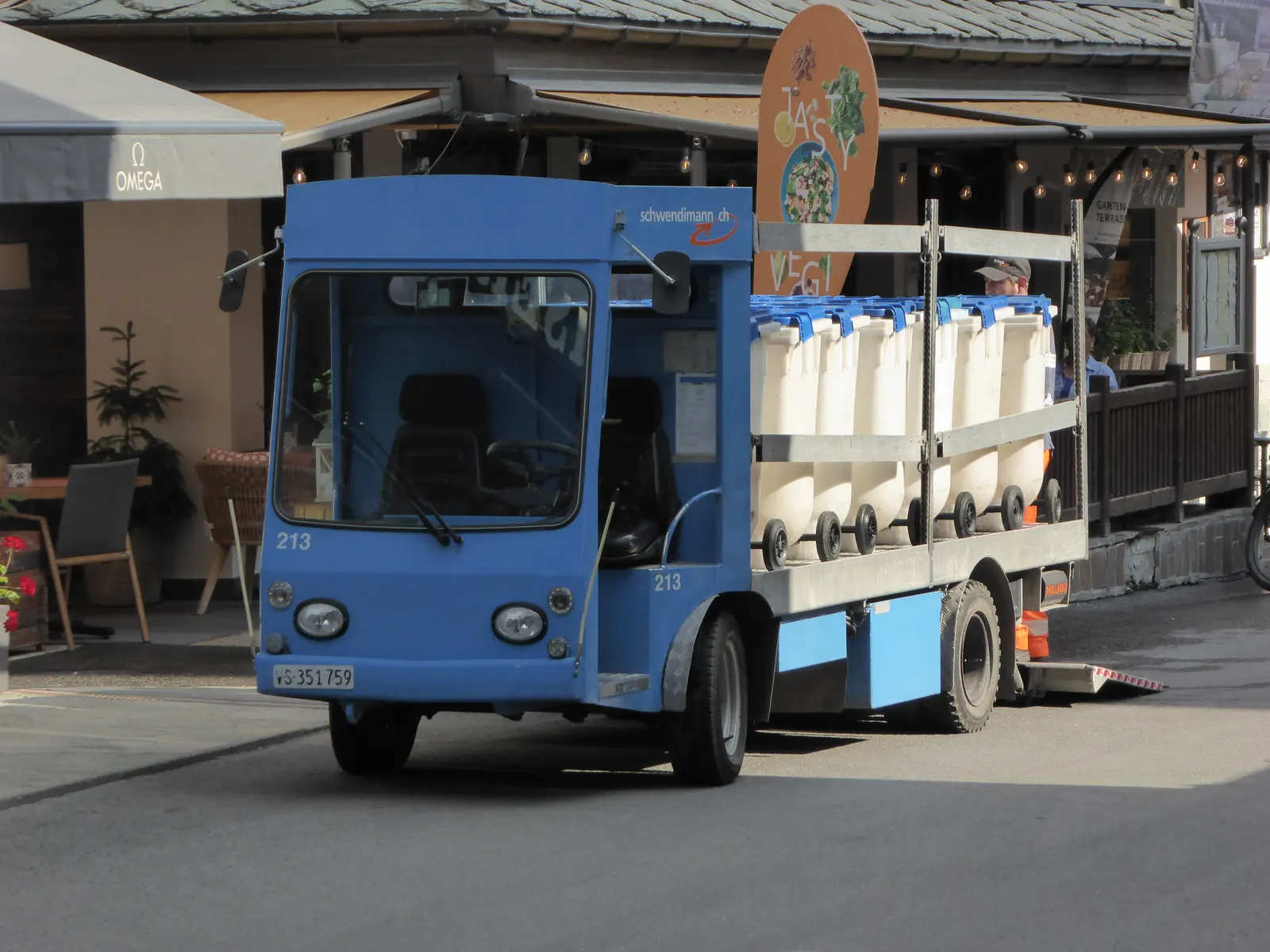
Photo: Abxbay / Wikimedia Commons · CC BY-SA 4.0
- ✓The Bahnhofstrasse is Zermatt's main street and social heart, running from the station toward the Matterhorn.
- ✓Watch and jewellery windows, outdoor and ski shops, bakeries, chocolatiers, fondue stuben and grand hotels line both sides.
- ✓Car-free since 1961 — the only traffic is foot, e-bus and the silent electric taxis that meet the trains.
- ✓At dusk it fills with the slow drift of people coming off the mountain; this is the village's après-ski stage.
The spine of the village
Step out of Zermatt's railway station and the Bahnhofstrasse — literally 'station street' — runs away in front of you toward the Matterhorn. It is the village's main artery and its social heart: the street where Zermatt does its shopping, its dining and its evening drift. Because the village is essentially one long ribbon on the valley floor at 1,608 m, the Bahnhofstrasse is also your primary axis of orientation — get to know it and you know your way around.
It has been free of combustion cars since 1961. The only things that move along it are people on foot, the village e-buses and the silent battery-powered electric taxis that meet the trains and ferry luggage to the hotels. That hush is the street's signature: at dusk the loudest sound is footsteps and conversation, and the lit shopfronts and hotel facades give it a warm, unhurried glamour.
This guide orients you along the street and points to the deeper category guides for shopping, eating and staying. For how the street fits into the wider village, read it alongside our village guide.

Shopping: watches, gear and Swiss souvenirs
The Bahnhofstrasse is the place to shop in Zermatt. The windows run from serious Swiss watchmaking and jewellery — Zermatt is, after all, a famously affluent resort — to the practical: outdoor and ski shops stocked with the technical clothing and equipment the mountain demands, and rental outlets where you can fit skis and boots for the morning. In between are chocolatiers, delicatessens selling Walliser specialities like air-dried meat and mountain cheese, and souvenir shops trading on the Matterhorn silhouette.
Opening hours shift with the season and the day of the week, and many shops keep a long midday or close earlier out of high season, so check before you make a special trip. Our dedicated shopping guide goes into the categories and the best of the windows in more detail.
Eating and drinking along the street
The Bahnhofstrasse and its immediate side lanes hold a good slice of Zermatt's dining. Bakeries open early for the lift crowd and are the place for a pre-mountain coffee and a fresh pastry; cafes and chocolatiers handle the mid-afternoon pause. In the evening the street turns to dinner: fondue and raclette stuben for the molten-cheese rituals that are the soul of Walliser cooking, alpine-Italian kitchens reflecting the nearby border, and the restaurants of the grand hotels for something more formal.
Book ahead in high season, especially for fondue and the better tables, and remember that the headline mountain-terrace lunches are up at Findeln and the other lift-station hamlets rather than on the street itself. For the full picture of where to eat, see our restaurants and cafes guides.

Hotels and where the street puts you
Several of Zermatt's landmark hotels stand on or just off the Bahnhofstrasse, and staying here puts the shops, the dining and the evening life at your door — convenient and central, if not the quietest corner of the village. The tradeoff is the usual one: a Bahnhofstrasse address means you walk out into the heart of things, whereas the ski-lift bases and the quieter Winkelmatten shoulder trade a little of that buzz for proximity to the slopes or a calmer night.
Because the village is small and entirely walkable, no base is far from anything, so the choice is really about what you want immediately outside the door. Our where-to-stay guide weighs the areas, the views and the Täsch parking tradeoff.

Après-ski and the evening drift
As the light goes and the lifts close, the Bahnhofstrasse becomes the stage for Zermatt's après-ski. People come down off the mountain still in their boots, the bars fill, and the lit street takes on its warmest character. It is more refined than the raucous party resorts — Zermatt's evening leans toward good wine, terrace heaters and conversation rather than foam parties — but the energy is real, and on a clear cold night with the Matterhorn floodlit at the end of the street it is hard to beat.
Wander it slowly, duck into whichever doorway has the right hum, and let the absence of traffic do its quiet work. The street that was a shopping spine by day becomes the village's living room after dark.
Walking the street: a quick orientation
It helps to picture the Bahnhofstrasse as a single gentle slope running south from the station toward the mountain, with the river and the rest of the village folding off it on either side. Out of the station doors, the silent electric taxis and luggage carts cluster on the left, waiting for arriving trains; ahead, the street narrows into its pedestrian heart, where the shop awnings begin and the crowd thickens. Keep walking and you pass the densest run of watch windows, gear shops and cafés before the street opens out near the parish church and its square — the natural midpoint of the village and a good place to reset your bearings.
From that church square, the lanes to your right drop the short distance to the Matter Vispa river and the footbridges, while ahead the village continues toward the old timber Hinterdorf and, eventually, the lift stations and the Winkelmatten shoulder. Because the whole walkable spine is well under half an hour end to end, you never need to plan routes here so much as drift; the street will deliver you to almost everything, and the Matterhorn at its far end is a permanent compass. First-time visitors often spend their opening evening simply pacing it once in each direction, getting the lie of the land before the serious sightseeing starts the next morning.
- The street runs south from the station, gently uphill, toward the Matterhorn.
- The parish church square is the natural midpoint and a good orientation reset.
- Side lanes drop right to the river and bridges; the old Hinterdorf lies beyond.
- Under 30 minutes end to end — drift rather than route-plan.

Best times to enjoy it, and a few practicalities
The street has two golden hours. Early morning, before the lifts swallow the crowd, the bakeries are warm and busy, the light slides down the valley, and the Matterhorn at the end of the street is often at its clearest — the photographers' favourite window. Then again at dusk, when the lifts close and the shopfronts and hotel facades light up, the street fills with the slow, contented drift of people coming off the mountain, and on a cold clear night the floodlit peak closes the view like a stage set. Midday is the busiest and least atmospheric stretch, especially in high season, so it is the natural time to be up a lift rather than down on the pavement.
A few practicalities smooth the experience. Shop and restaurant hours move with the season and the day of the week, and the village runs quieter in the shoulder weeks of spring and autumn, so confirm opening before a special errand. The electric taxis and e-buses share the street with pedestrians at walking pace — they are silent, so glance before you step out for a photo. And while the Bahnhofstrasse is the commercial spine, remember that the prettiest mountain-restaurant terraces and the best Matterhorn-reflection lakes are up the lifts, not on the street; the Bahnhofstrasse is where the day begins and ends rather than where its scenery peaks.
- Two golden hours: early morning for clear peak views, dusk for the lit après-ski drift.
- Midday is busiest and least atmospheric — be up a lift instead.
- Hours shift by season and weekday; the shoulder weeks are quieter — confirm before a special trip.
- Silent e-taxis and e-buses share the street at walking pace — look before stepping out.
At a glance
A quick orientation card for the street. Opening and closing hours shift by season and day, so verify before a special trip.
- What it is: Zermatt's main street, running from the station toward the Matterhorn.
- Getting there: it starts at the station — you arrive on it.
- Traffic: none. Foot, e-bus and silent electric taxi only, car-free since 1961.
- Shopping: watches and jewellery, outdoor and ski gear, chocolate, Walliser specialities.
- Eating: early bakeries, cafes, fondue and raclette stuben, hotel restaurants.
- Evenings: après-ski, wine bars and the village's social heart.
- Tip: the Matterhorn frames the end of the street — best at first light and after dark, floodlit.

Zermatt Village Guide
How the car-free village fits together on the floor of the valley — the Bahnhofstrasse spine, the old timber Hinterdorf, the church and cemetery, the river, the museum and the angles on the Horu.
Read guide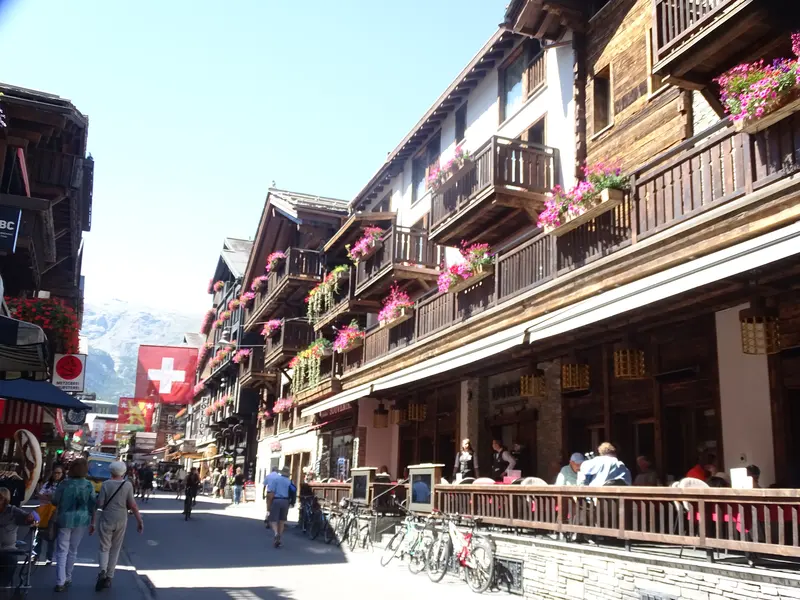
Shopping in Zermatt
Outdoor gear, Swiss watches, chocolate and honest souvenirs along the Bahnhofstrasse — and how a shopping hour fits a car-free Zermatt day.
Read guide
Best Cafés & Bakeries in Zermatt
Where to find good coffee, fresh pastries, dark Valais bread and Swiss chocolate in car-free Zermatt — the early-lift breakfast stops, the village bakeries on the Bahnhofstrasse, and the warm café breaks that rescue a cold or rainy day.
Read guideMore in Things to Do
6
Best Photo Spots in Zermatt
Matterhorn photo locations from the village bridges, Gornergrat, Riffelsee, Stellisee and Rothorn, with sunrise routes and reflection timing.
Read guide
Best Things to Do in Zermatt
A ranked, first-trip shortlist for a car-free resort under the Matterhorn — the ascents, walks, ski days and long mountain lunches worth building a trip around.
Read guide
Free Things to Do in Zermatt
Village walks, Matterhorn photo spots, churches, old Walliser houses, riverside paths and low-cost ways to enjoy an expensive alpine resort for nothing.
Read guide
Rainy Day Zermatt
Museums, spas, cafés, fondue, hotel lounges, scenic trains, short walks and lift-backup logic for making the most of bad weather in the mountains.
Read guide
Self-Guided Zermatt Village Walk
A gentle, step-by-step loop on the valley floor linking the station, the Bahnhofstrasse, the old timber Hinterdorf, the church and cemetery, the river bridges and the best Matterhorn angles.
Read guide
Swiss National Day in Zermatt
How Zermatt marks Swiss National Day on 1 August — flags and bunting on the Bahnhofstrasse, music and food, the lakeside gathering at Leisee, family planning and the village's car-free festivity beneath the Matterhorn.
Read guide