
Shopping in Zermatt
Outdoor gear, Swiss watches, chocolate and honest souvenirs along the Bahnhofstrasse — and how a shopping hour fits a car-free Zermatt day.
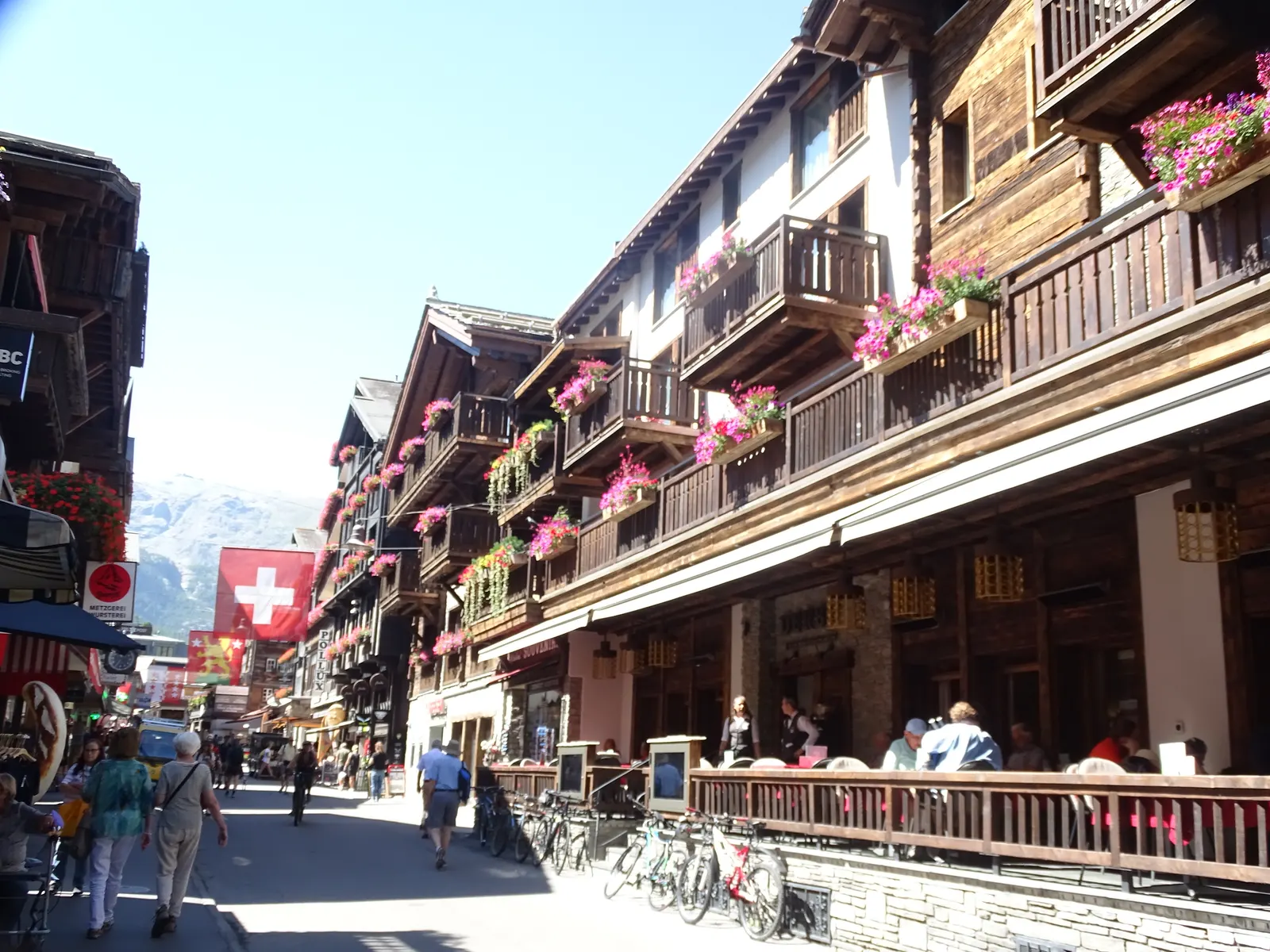
Photo: Abxbay / Wikimedia Commons · CC BY-SA 4.0
- ✓The Bahnhofstrasse is the village's single shopping spine — sport shops, watchmakers, chocolatiers and souvenir stores in a few hundred car-free metres.
- ✓Outdoor and ski gear is the genuine speciality: this is a working mountaineering town, not a mall with a view.
- ✓Swiss watches, knives and chocolate are the classic take-homes; verify prices and any tax-refund paperwork in store.
- ✓Shop in the soft hours — a snowy afternoon or after the lifts close — and keep the clear mornings for the mountain.
One street, read end to end
Zermatt's shopping is almost entirely the Bahnhofstrasse, the lamp-lit pedestrian spine that runs from the station toward the church with the Matterhorn standing at the far end of it. There are no cars to dodge and no shopping centre to get lost in: you walk it slowly, both sides, and you have seen most of what the village sells in under twenty minutes. That compactness is the charm. Browsing here feels less like errand-running and more like an evening stroll that happens to pass watch windows and chocolate counters.
Because the village is car-free and vertical, shopping naturally folds into the rhythm of the day rather than commanding it. People drift along the Bahnhofstrasse when the light has gone flat on the peak, when a storm has closed the upper lifts, or in the warm gap between the last run and dinner. Treat it the same way and you will enjoy it more — and keep your clear, blue mornings for the cog and the trails, where they belong.
What Zermatt is actually good at buying
This is a working mountaineering town, and the shops reflect it. The strongest category by far is outdoor and alpine gear: hardshells, base layers, boots, gloves, poles, sunglasses and the small technical pieces you only realise you forgot once you are above the treeline. If you arrive under-equipped for the altitude or the weather has turned, the village can re-kit you properly — and the staff in the sport shops tend to actually climb and ski, so the advice is worth more than the markup.
After gear come the Swiss take-homes. Watchmakers cluster on the Bahnhofstrasse, from approachable brands to the grand names; knife and tool shops carry the familiar red-handled icons; and the chocolatiers and confiseries handle the edible souvenirs, from pralines to the Matterhorn moulded in chocolate. Souvenir stores fill the gaps with cowbells, embroidered linens, Blacknose-sheep soft toys and the inevitable fridge magnets. None of it is unique to Zermatt, but the setting makes the buying feel like part of the trip.
A gentle word on expectation: this is one of the Alps' most prestigious resorts, and prices reflect both that and the cost of hauling everything up a single rail line into a village with no road. You are not here for a bargain. You are here to pick up something you will genuinely use or genuinely keep, in a place you will remember buying it.
- Outdoor & ski gear — the real strength; technical clothing, boots and accessories with knowledgeable staff.
- Swiss watches — from accessible to high-end, with several specialist windows on the Bahnhofstrasse.
- Chocolate & confiserie — pralines, bars and Matterhorn-shaped moulds; good last-minute gifts.
- Swiss knives & tools — the classic pocketknife and kitchen pieces.
- Souvenirs — cowbells, soft-toy Blacknose sheep, embroidered textiles, prints of the peak.
Buy versus rent, and what to carry home
Not everything in the windows is worth buying. For skis, boards and boots used a handful of days a year, renting almost always wins on cost, hassle and the weight you have to drag back down the valley. Save the purchasing for the things you will reuse — a good shell, proper gloves, decent glacier sunglasses — and for the small consumables the mountain demands, such as high-factor sun cream and lip balm, which the pharmacies and sport shops both stock.
If you are flying home, think about weight and fragility before you fall for a litre of kirsch or a stack of chocolate. Chocolate travels best in cool weather and least well in a summer rucksack on a warm train; cheeses and cured meats have their own customs rules depending on where you live, so check before you commit. Watches and other higher-value goods may qualify for a VAT refund for non-residents — ask in the shop about the paperwork at the point of sale rather than assuming it, as the thresholds and process can change.
- Rent skis, boards and boots; buy the layers, gloves and sunglasses you'll reuse.
- Sun cream and lip balm are mountain essentials — easy to buy in the village if you forgot.
- Ask about VAT-refund paperwork in store at purchase if you live outside Switzerland (verify current rules).
- Chocolate and perishables: mind the heat and your home country's import limits.
Timing, payment and the small practicalities
Shop hours in an alpine resort flex with the season and the snow, so treat any posted times as a guide and verify on the day; expect a quieter shoulder season and longer, livelier evenings in deep winter and high summer. Cards are accepted almost everywhere and Swiss francs are the working currency — some shops will take euros but give change in francs at a rate that rarely favours you, so paying by card is usually the cleaner option.
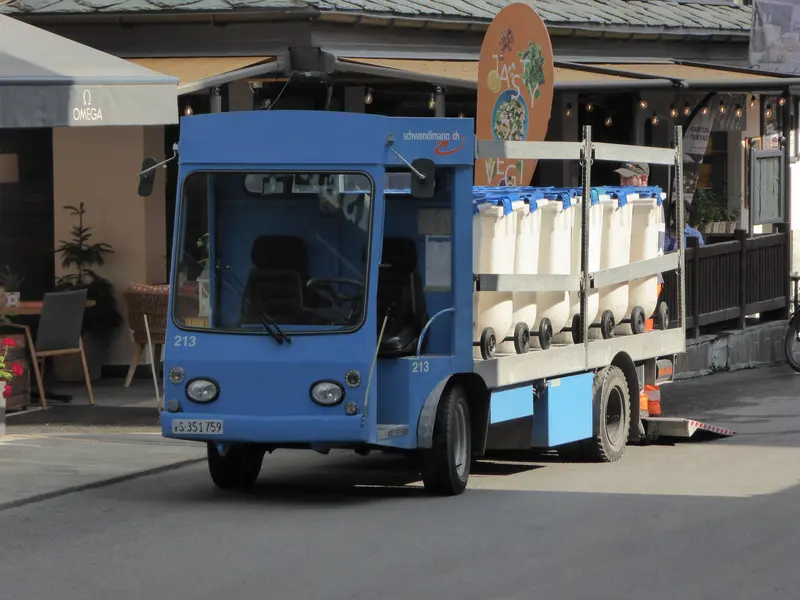
Logistically, remember the car-free rule shapes everything. There are no kerbside loading zones and no driving your purchases to the door; your hotel's electric cart, the e-buses or your own arms move things the last stretch. That is one more reason to shop light, buy what you will carry, and let the Bahnhofstrasse be an evening pleasure rather than a haul.
- Hours flex by season — verify on the day; winter and summer evenings run latest.
- Pay by card in Swiss francs; euros may be taken but change comes in francs.
- No cars means no door-to-door delivery — carry light, the car-free way.

Food shopping: edible souvenirs and self-catering
Beyond the watch and gear windows, the most rewarding shopping in Zermatt is often edible. The village delicatessens and cheese shops carry genuine Valais specialities worth carrying home: air-dried Walliser Trockenfleisch (the canton's cured beef), mountain cheeses including the raclette varieties that built the local table, rye bread, alpine honey, and fruit spirits like the kirsch and Williams pear brandy distilled across the region. These are not generic souvenirs but the actual food of the valley, and a vacuum-packed wedge of mountain cheese or a tin of dried meat makes a far better gift than another fridge magnet — subject, as ever, to your home country's rules on bringing in dairy and meat, which are worth checking before you load your bag.
If you have a chalet or apartment with a kitchen, the practical face of food shopping is the village supermarkets, which stock the everyday groceries that make self-catering viable in an otherwise pricey resort. Prices run higher than in the lowlands — everything arrives by the single rail line — so the budget-minded sometimes buy the bulk of their provisions before they reach the mountains and top up in the village. Either way, knowing where the supermarkets and bakeries sit relative to your base saves time, and a morning bakery run for bread and pastries is one of the small daily pleasures of a Zermatt stay.
- Valais specialities — Trockenfleisch, mountain and raclette cheeses, rye bread, honey, kirsch — make the best edible gifts.
- Check your home country's dairy and meat import rules before buying to carry home.
- Village supermarkets make self-catering viable, though prices run above lowland levels.
- Budget self-caterers often stock up before arriving and top up in the village.


A shopping hour by season
When you shop shapes what the experience feels like. In deep winter, the Bahnhofstrasse is at its most seductive after dark: lit windows, snow underfoot, the floodlit peak at the end of the street and the après crowd drifting between bars and shops. That is the time to browse watches and try on the warm layer you under-packed, ideally on a day the weather has already closed the upper lifts so you are not trading mountain time for retail. In high summer the same street is brighter and busier by day, and the natural shopping window is the late afternoon, once you are down from a hike and before dinner, when the chocolatiers and gear shops are an easy, unhurried wander.
The shoulder seasons — late spring and late autumn — are the quietest, and some shops keep shorter hours or close entirely between the winter and summer rushes, so a dedicated shopping plan is least reliable then; confirm before making a special trip. Whatever the month, the guiding principle holds: Zermatt's shopping is a pleasant supporting act, not the headline. Fold it into the soft, weather-flat or post-activity hours, buy the few things you will genuinely use or keep, and let the cog railway, the trails and the terraces have your best, clearest time.
- Winter: best after dark, ideally on a lift-closed day, with the lit street and floodlit peak.
- Summer: late afternoon, down from a hike and before dinner, is the natural window.
- Shoulder seasons are quietest and some shops shorten hours or close — verify first.
- Keep shopping to the soft hours and save clear mountain time for the mountain.

Bahnhofstrasse Zermatt Guide
The spine of the car-free village — the shops, restaurants, hotels and après-ski energy of Zermatt's main street, with practical orientation from the station to the Matterhorn.
Read guide
Ski rental in Zermatt
Where and how to rent skis, boots, boards, helmets and lockers in Zermatt — by village area, lift base and hotel convenience — plus how the boot fitting, the car-free logistics and the booking actually work.
Read guide
Best Cafés & Bakeries in Zermatt
Where to find good coffee, fresh pastries, dark Valais bread and Swiss chocolate in car-free Zermatt — the early-lift breakfast stops, the village bakeries on the Bahnhofstrasse, and the warm café breaks that rescue a cold or rainy day.
Read guide