
Zermatt Winter Itinerary for Non-Skiers
A full no-ski winter plan beneath the Horu — the Gornergrat cog and Glacier Paradise as pure sightseeing rides, prepared winter walking and snowshoe trails, a sledge run, the Glacier Palace ice cave, the Matterhorn Museum, fondue and a long spa afternoon, all from a car-free village.

Photo: Jonathan Sollender / Unsplash
- ✓Zermatt has a full second life in winter for people who don't ski — the lifts work as pure sightseeing rides.
- ✓Prepared winter walking paths and snowshoe trails let you walk in the snow with the peak in view, no skis needed.
- ✓A sledge run, the Glacier Palace ice cave and the Matterhorn Museum fill the days; fondue and a spa fill the evenings.
- ✓Keep the high sightseeing rides for the clearest, calmest mornings and let the village absorb a grey day.
Winter Zermatt without the skis
It is one of the most common worries about a winter trip: what do you do in a ski resort if you don't ski? In Zermatt, the answer is a great deal. The same lifts that carry skiers also carry sightseers — the Gornergrat cog and the Glacier Paradise cable car run as scenic rides in their own right — and the village runs a network of prepared winter walking paths and signed snowshoe trails specifically so that non-skiers can get out into the snow safely. Add a sledge run, an ice cave, a museum, the car-free streets and the grand spas, and a non-skier's winter week is full rather than thin.
The mindset that makes it work is the same one that runs through every Zermatt plan: read the mountain by altitude and the day by weather. The high sightseeing rides are worth doing only when the peak is out, so keep them flexible and play them on the clear, calm mornings. The walks, the museum, the spa and the long fondue dinners absorb the grey days happily. Below is a three-to-four-day shape built entirely without a pair of skis — and arguably it's the more romantic, more unhurried way to experience the village in winter.

Before you go: a warm, central base and the car-free arrival
Sort the car-free arrival first. The public road ends at Täsch; you park at the Matterhorn Terminal there and take the shuttle train up (about 12 minutes), or arrive entirely by train via Visp and Brig. In winter the all-train option is especially appealing — no snow-chains, no icy mountain road, just rails to the door, where your hotel will meet you with an electric cart.
For a base, stay in the village and lean toward somewhere with a good spa or pool, because indoor warmth is a bigger part of a non-ski winter trip than a ski one. Central placement matters more than lift-base proximity here: you want the bakeries, the museum, the church and the funicular all within an easy, well-lit walk. Pack properly for cold and for walking on snow — warm boots with grip, layers, gloves and a hat — because you'll be out in the weather on foot rather than insulated by ski gear and constant motion.

Day 1 — Settle in, the village, and a first winter walk
Keep the arrival day low and warm. Once bags are down, walk the village: the Bahnhofstrasse with its lit windows, the old Hinterdorf with its snow-capped larch barns, the Kirchbrücke for the down-the-street view of the Matterhorn against a white valley. The parish church and the Mountaineers' Cemetery are quietly moving in the snow and cost nothing. If your legs want more, the lower prepared winter walking paths around the valley floor are flat, signed and gentle — a perfect first taste of walking in the snow with the peak in view.
As the early winter dark comes in, the village glows. This is the evening for the first proper Valais meal — a fondue or a raclette in a cosy stube is exactly the right antidote to the cold, and a non-ski trip leans happily on long, warm dinners. Book ahead in high season. Then an early night; the high sightseeing day tomorrow wants a clear head and a clear sky.
- Low, warm arrival day — village walk only.
- Hinterdorf, Kirchbrücke peak view, church and cemetery in the snow (all free).
- An easy first winter walk on the flat, signed valley-floor paths.
- Fondue or raclette for the first dinner; book ahead in high season.


Day 2 — Gornergrat as a pure sightseeing ride
Spend your first clear, calm morning on the Gornergrat cog — and as a non-skier you get to enjoy it purely for what it is, without any pressure to peel off and ski. The railway has climbed the rack since 1898 and lifts you in about half an hour to an open-air station at 3,089 m, the highest open-air railway station in Europe, ringed by 29 four-thousanders and the Gorner glacier. In winter the whole world up there is white and silent. Sit on the right going up for the Matterhorn, wrap up warmly for the cold and thin air, and take your time on the terrace.
You don't have to come straight back down. The upper stations are linked by prepared winter walking trails — the panoramic ridge walks between Rotenboden, Riffelberg and Riffelalp are signed and groomed for walkers, giving you a high snow walk with constant Matterhorn views and a warm mountain restaurant at the end. Pick a section that matches the cold and your footwear, and ride the cog back from a lower station. A long lunch on a sunny high terrace closes the morning beautifully.
- Time Gornergrat for a clear, calm morning — the cog to 3,089 m, no skis required.
- Sit on the right going up; dress for serious cold and thin air on the open terrace.
- Walk a section of the prepared upper winter trails (Rotenboden–Riffelberg–Riffelalp).
- Long high-terrace lunch, then ride the cog down from a lower station.

Day 3 — Glacier Paradise, the ice cave, and a sledge run
On another clear morning, ride higher still. The Matterhorn Glacier Paradise cable car climbs to the highest cable-car station in Europe at 3,883 m, with a viewing platform over a sea of four-thousanders and, just below it, the Glacier Palace — an ice cave carved into the glacier with sculptures and an ice slide, a genuinely otherworldly, entirely non-ski experience that's a highlight of a winter trip. It is properly high and cold; move gently, dress for it, and don't linger if the altitude tells you to come down.
For the afternoon, add the joyful, accessible side of winter snow: a sledge run. Zermatt has dedicated tobogganing runs that need no skill at all — you ride a lift up and slide down on a simple sledge, laughing the whole way. It's one of the best things a non-skier can do in a ski resort, and an easy, exhilarating contrast to the high sightseeing of the morning. Check which runs are open and how the sledge hire works on the day.
- Glacier Paradise cable car to 3,883 m — the highest cable-car station in Europe.
- The Glacier Palace ice cave: sculptures and an ice slide carved into the glacier.
- Move gently at altitude; dress for serious cold; come down if you feel the height.
- Afternoon: a sledge run — no skill needed, ride up and slide down, pure fun.


Day 4 (or a grey day) — Museum, snowshoeing, spa and slow village
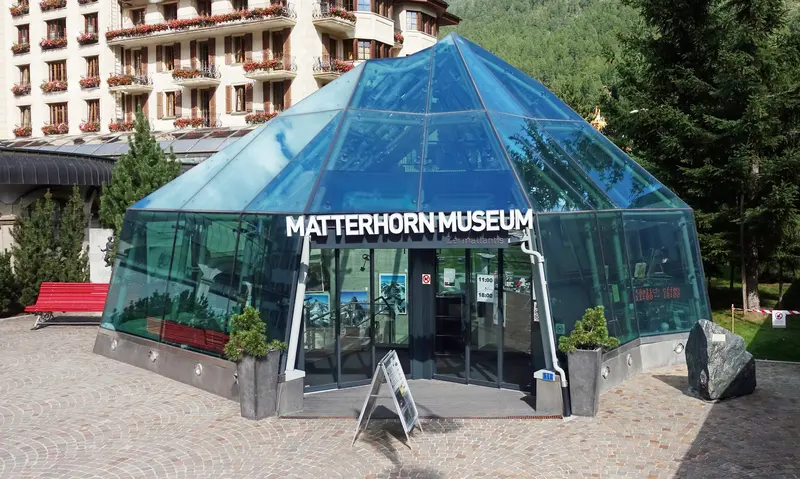
Keep a day — or a low-cloud day swapped in from the schedule — for the indoor and gentler outdoor pleasures. The Matterhorn Museum down in the village tells the gripping story of the first ascent in 1865 and the mountain's victims, with real climbing relics and a reconstructed old village, and it's the best wet- or grey-weather anchor in Zermatt. Pair it with a guided or self-guided snowshoe outing on the signed trails if the weather's kind — snowshoeing is the quintessential non-ski way to walk into untracked winter terrain, easy to learn and deeply atmospheric.
Then give the late afternoon to a spa. A long session in a pool, sauna and steam room — several hotels open their spas to outside guests, and some frame the peak in the glass — is the perfect close to a day on the snow, and a luxurious antidote to the cold. Round off with another fondue, a glass of Valais wine, and a slow walk back through the lit, silent, car-free streets. The whole non-ski week proves the point that runs through every Zermatt plan: the village and the view do most of the work, with or without skis.
- The Matterhorn Museum — the gripping first-ascent story; the best grey-day anchor.
- A guided or self-guided snowshoe outing on the signed trails when the weather's kind.
- A long spa afternoon — pool, sauna, steam; the perfect ski-free wind-down.
- Close with fondue, Valais wine and a slow walk through the lit, silent streets.

At a glance — no-ski winter in Zermatt
A non-ski framework for three to four days. The activities and the weather logic are evergreen; lift services, winter-trail grooming, the Glacier Palace, museum and spa openings, sledge-run availability and all prices change with the season and conditions — confirm the specifics on the official sites before you travel.
- The lifts work as pure sightseeing rides; the village runs winter walking and snowshoe trails.
- Arrive car-free via the Täsch shuttle or all the way by train; base centrally, ideally with a spa.
- Day 1: settle, village walk, an easy winter walk, fondue.
- Day 2: Gornergrat as a sightseeing ride + a prepared upper winter trail (clear morning).
- Day 3: Glacier Paradise and the Glacier Palace ice cave, then a sledge run.
- Day 4 / grey day: Matterhorn Museum, snowshoeing, a long spa, slow village.
- Keep the high rides for clear, calm mornings; let the village absorb grey days.
- Verify lift hours, trail grooming, attraction openings and prices before travelling.

Winter Activities for Non-Skiers
A full winter in Zermatt without clicking into skis — the Gornergrat cog to the high terraces, winter walking trails, sledging, spas, cafés and fondue, the museum and the scenic lifts that put you among the four-thousanders.
Read guide
Gornergrat Guide
The cog railway, the viewpoints, Riffelsee, the Kulmhotel, the mountain restaurants and the weather strategy for the highest open-air railway station in Europe.
Read guide
Spa hotels in Zermatt
How to choose a Zermatt spa hotel by what wellness actually means on a cold mountain trip — sauna and steam after a day at altitude, a warm pool with the Matterhorn in the window, treatment depth, and the difference between a couples' retreat and a family-friendly pool.
Read guideMore in Itineraries
6
Five days in Zermatt
A fuller, unhurried plan for the car-free village — two headline mountain days, a proper hike or ski day, a rest-and-village day, a day trip by the Glacier Express or over to the lakes and gorges, and the weather flexibility to move any of it to the right morning.
Read guide
Luxury Zermatt Itinerary
A high-end three-to-four-day plan beneath the Horu — a Matterhorn-view suite you wake in at dawn, a hotel spa, a private cog ride to Gornergrat, a guided mountain day, fine dining, and the arrival by Glacier Express — built on the village's quiet, restrained luxury of larch, stone and silence.
Read guide
One Day in Zermatt
A realistic single-day plan for Zermatt — one decisive big-view lift (Gornergrat or Glacier Paradise), time in the car-free village, the best photo stops, and the car-free logistics that make a day-trip work.
Read guide
Three Days in Zermatt
A deeper three-day plan — both flagship lifts, Gornergrat and Glacier Paradise, a proper hike or ski morning, the best restaurants, a spa afternoon and the unhurried village time that makes the car-free valley sing.
Read guide
Two Days in Zermatt
A balanced 48 hours beneath the Horu — one headline lift, a contrasting second mountain or an easy hike, the best of the village, two long meals and the room to flex around the weather.
Read guide
Weekend in Zermatt
A Friday-to-Sunday plan for the car-free village — arrival via Täsch or the train, the hotel timing that smooths the first evening, one decisive mountain day flexed to the forecast, and the slow, well-fed Sunday that sends you home unhurried.
Read guide