
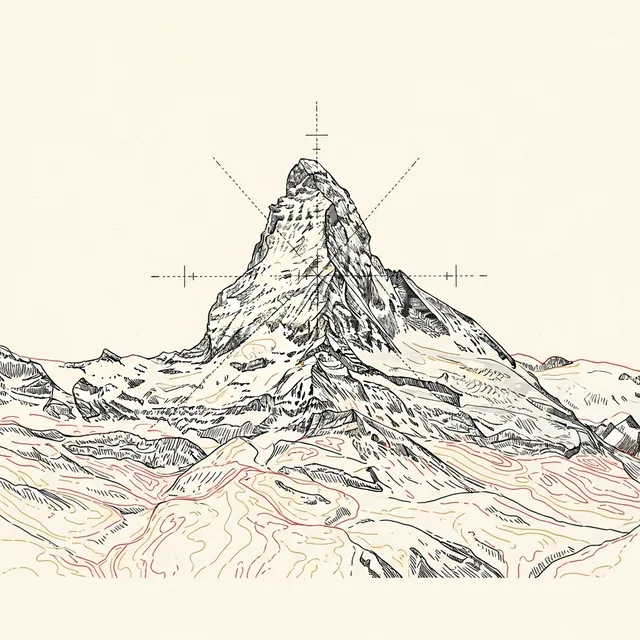
Zermatt Itineraries
Ready-made plans for one to five days beneath the Horu — ski weekends, summer hiking, couples, families, non-skiers, luxury and budget — all built around the two variables that govern a Zermatt trip: the weather and the lifts.

Photo: Andras Toth / Unsplash
- ✓Plan around clear-weather days — keep the headline viewpoint flexible until the forecast firms up.
- ✓Read Zermatt by altitude: every plan is really a sequence of lift stations and the walks between them.
- ✓One to three days covers the essentials; a longer stay lets the mountain set the pace instead of the clock.
- ✓Whatever the length, plan the car-free arrival first and the big-view day last — so you can move it to the clearest morning.
How to plan a Zermatt trip
Zermatt runs on two variables, and once you understand them the planning falls into place: the weather and the lifts. The weather decides whether the Matterhorn is out and the high stations are worth the ride; the lifts — the Gornergrat cog, the Sunnegga funicular, the Glacier Paradise cable cars — decide how you gain height and where you can walk or ski from. Almost every good Zermatt day is a sequence of one or two lift rides and the trails, pistes or terraces between them, chosen on the morning to suit the sky. The village floor at 1,608 m is the base you return to; everything memorable happens higher up.
So the planning order is simple. Pick your season and your length of stay. Sort the car-free arrival, because the public road ends at Täsch and your last leg is rails, not tyres. Choose a base in the village (or in Täsch if a car and budget matter more). Then sketch your days loosely and leave the single biggest viewpoint — Gornergrat or Glacier Paradise — as a flexible card you can play on the clearest, calmest morning of the trip. The itineraries below do exactly this: each is a framework to flex around the forecast, not a timetable to obey.
The length-of-stay plans
Most people come to Zermatt for a long weekend or a few days, and the shape of a good trip changes quickly with each extra day. One day is a single, decisive choice — one big lift, the village, and not much else. Two days lets you pair the headline viewpoint with a contrasting mountain or an easy hike. Three days adds depth: a second high lift, a proper hike or ski morning, restaurants and a spa afternoon. Beyond that the mountain begins to set the pace instead of the clock, and you can simply follow the weather. The detailed day-by-day plans live on their own pages, each built to flex around the forecast.
Use these as a ladder. If you have one day, read the one-day plan and accept that it is a taster. If you have two or three, the extra time is best spent on variety — a different flank of the valley, a long lunch, a slow morning — rather than on cramming more lifts into the same hours. The car-free village rewards an unhurried rhythm, and the single most common planning mistake is trying to see everything at once when the weather will only ever let you see some of it well.
 One day in ZermattA realistic single-day route — one big-view lift, village time and car-free logistics.
 Two days in ZermattA balanced 48 hours — one headline lift, a second mountain option, food and village time.
 Three days in ZermattA deeper plan with Gornergrat, Glacier Paradise, hiking or skiing, restaurants and spa time.
Summer & hiking trips
When the snow pulls back — roughly June to October — Zermatt becomes one of the densest trail networks in the Alps, with more than 400 km of marked paths fanning out from the village and the lift stations. A summer itinerary is built the same way as any other: ride a lift to gain height, then walk a traverse rather than a climb. The Five Lakes Walk above Sunnegga, the Gornergrat ridge, the Matterhorn Glacier Trail and the quiet mountain lakes are the classics, and a settled spell lets you string several together over a few days. Golden larches make late September and early October a quiet favourite.
Plan a hiking trip around the forecast and your fitness, not around ticking off every famous path. Most walkers ride up and walk mostly downhill; the reflection lakes reward an early start when the water is still; and even a gentle, well-marked trail is high alpine ground, so layers and a weather check are non-negotiable. Pair the walks with long terrace lunches at Findeln or Riffelalp and you have the unhurried summer rhythm the village does best.


Ski weekends & winter trips
In winter — roughly November to April on the valley pistes, year-round on the glacier — Zermatt is a big, high, snow-sure ski area of around 360 km of pistes across three sectors that link over the border into Cervinia, Italy. A ski weekend is the most popular winter shape: arrive Friday, ski Saturday and Sunday across the Sunnegga-Rothorn, Gornergrat and Matterhorn (Schwarzsee–Glacier Paradise) sectors, and let the lift status steer you, since a windy day can shut the top. Beginners start at Sunnegga and Wolli Park; confident skiers head for the glacier and the Italian crossing.
Build a winter itinerary with the snow report and lift status open from the start. The headline ski experiences — the high glacier runs, the long descent toward Cervinia, the early-morning corduroy off Gornergrat — all depend on the upper lifts being open, so keep the plan adaptable and ski the sector the weather favours. Non-ski mornings (a snowshoe trail, a sledge run, a spa) round out a winter trip nicely, and the same flexible-day logic applies: keep the big glacier ride for the clearest, calmest morning.


Trips for couples
Zermatt is quietly, almost effortlessly romantic — car-free, vertical, hushed, with the Horu turning pink at first light over a village of larch and stone. A couples' itinerary leans into that rather than against it: a sunrise from the Kirchbrücke or, more ambitiously, a dawn reflection at Riffelsee or Stellisee; a long terrace lunch with the peak on the table; a spa afternoon; and the blue hour from a balcony with a glass of something. The single indulgence worth paying for is a Matterhorn-view room you'll actually wake up in at dawn.
Keep a romantic trip unhurried and weather-led. Plan one or two headline moments — the dawn light, a private cog ride, a tandem flight on a calm morning — and let the spaces between them be slow. The village does intimacy well precisely because nothing rushes: you arrive by rail, you walk everywhere, and the mountain settles every decision about where to look. A two- or three-day plan flexed for couples is mostly about leaving room.


Trips with kids & families
Zermatt is an unusually easy place to travel with children: car-free streets mean no traffic to worry about, the lifts are an adventure in themselves, and there are gentle, rewarding outings at every age. A family itinerary clusters the kid-friendly anchors — Leisee above Sunnegga for summer swimming and the Wolli Park play area, the marmot trails and easy lake walks, a ride up the famous cog to the ice — and keeps the days short, with snacks and a clear bail-out plan. The funicular to Sunnegga is the family workhorse: quick, sunny and close to the gentlest terrain.
The trick with families is to under-program. Pick one mountain outing a day, build in plenty of terrace and playground time, and treat the lifts and the animals — the blacknose sheep, the marmots, the goats parading through the village in summer — as the entertainment they genuinely are. Older kids and teens can take on the suspension bridges, the flow trail and the e-bike routes. Keep the headline high-altitude ride for a settled day, the same as any other plan.


Trips for non-skiers & rainy days
Not everyone in winter skis, and not every day is clear — and Zermatt has a full second life for non-skiers. A non-ski winter plan leans on snowshoe and winter-walking trails, a sledge run, the high viewpoints reached purely as sightseeing rides, the Glacier Palace ice cave at the top of Glacier Paradise, and the museums, churches and old Hinterdorf in the village. The car-free centre is a pleasure to wander on foot, and the spas give a luxurious indoor anchor to any cold or grey day.
Treat a rainy or low-cloud day as a gift for the indoor and village side of the trip rather than a write-off: the Matterhorn Museum, a long lunch, the bakeries and bars, the shopping on the Bahnhofstrasse, a spa afternoon. Keep your weather-dependent plans — the high lifts, the hikes, the flight — for the clear days, and let the village absorb the rest. That swap-the-plan instinct is the heart of every itinerary here.


Luxury & budget — same village, two paces
Zermatt stretches across both ends comfortably. A luxury itinerary pairs a Matterhorn-view suite and a hotel spa with private touches — a dawn cog to Gornergrat, a tandem flight, a long fine-dining dinner, a guided summit day for the very ambitious — and lets the village's restraint do the work; the luxury here is larch, stone, silence and the peak in the window, not flash. A budget trip, meanwhile, is genuinely possible: free village walks, the churches and the Hinterdorf, the photography spots, the lakes you can reach on foot, and the Täsch tradeoff of a shuttle for cheaper beds and easier parking.
The clever thing is that both versions share the same headline days. Whether you ride the cog in a private carriage at dawn or on a standard morning ticket, the view is the same; whether you lunch at a grand terrace or on a bakery picnic by a lake, the Matterhorn is the same. Decide where to spend and where to save, and the itineraries below work at either pace.


At a glance
How to choose and shape a Zermatt itinerary. The planning logic, the seasons and the structure are evergreen; lift services, opening dates, pass options and prices all change with the season and the weather, so confirm the specifics before you travel.
- Two variables run everything: the weather (is the peak out?) and the lifts (how you gain height).
- Plan order: arrival → base → loose daily sketch → keep the big viewpoint flexible.
- One day = one big lift and the village; two = add a contrast; three = add depth, food and spa.
- Summer (≈Jun–Oct): hiking and lakes. Winter (≈Nov–Apr; glacier year-round): three ski sectors.
- Flex by traveller: couples slow down, families under-program, non-skiers lean on village and snowshoe days.
- Arrive car-free via Täsch; choose village vs Täsch for your base.
- Lift hours, dates, passes and prices change — verify on the official sites before travelling.

Putting it together
Start with the length-of-stay plan that matches your trip and read it alongside the lens that fits you — couples, family, ski, non-ski, luxury or budget. Lift the bones from one and the flavour from the other, then hold the result loosely. The best Zermatt itinerary is the one you are willing to rearrange on the morning the forecast changes: a clear, calm day belongs to the high lifts and the long views, a grey one to the museums and the spa, and the village floor is happy to absorb either.
Above all, leave room. The car-free valley does its finest work when you slow down to its pace — the dawn light, the long lunch, the unhurried walk back as the windows come on beneath the peak. Plan enough to catch the headline moments on the right days, and leave the rest of the time soft. The Matterhorn rewards patience far more than schedules.
